
Your roof works hard every single day, shielding your home from rain, wind, frost, and the unpredictable swings of British weather. Most of the time, it does its job quietly in the background, and it’s easy to forget about it entirely. But roofs don’t fail overnight. In most cases, there are warning signs long before a small issue turns into a costly emergency.
For homeowners in Chelmsford and across Essex, knowing how to spot these early warning signs can save you thousands of pounds in repair costs, prevent damage to your belongings, and avoid the stress of an emergency callout in the middle of a storm.
In this guide, we’ll walk through the most common signs that your Chelmsford home needs an urgent roof repair, why these issues happen, and what to do if you spot them.
Why Acting Quickly on Roof Problems Matters
A roof issue that seems minor today, a missing tile, a small drip, a patch of damp, can quickly escalate into something far more serious if left unaddressed. Water doesn’t stay where it lands. It travels along timbers, soaks into insulation, and finds its way into walls and ceilings, often causing damage that’s hidden until it’s extensive.
Delaying a roof repair can lead to:
- Structural damage to roof timbers and rafters
- Damp and mould growth, which can affect indoor air quality
- Damaged insulation, leading to higher energy bills
- Ruined ceilings, plasterwork, and decoration
- A much larger and more expensive repair bill down the line
Acting on the warning signs early means smaller, more affordable repairs, and a roof that continues to protect your home for years to come.
Signs Your Home Needs Urgent Roof Repairs
1. Missing, Slipped, or Damaged Tiles and Slates
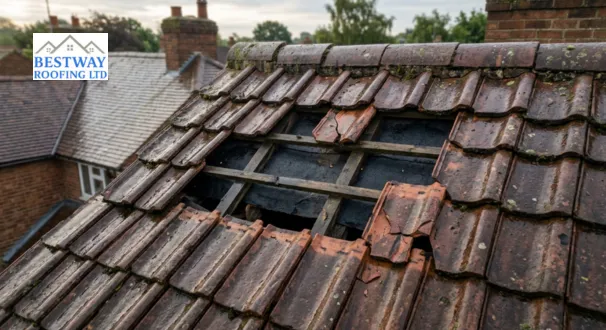
After a period of strong winds or heavy rain, take a look at your roof from ground level, or ask a professional roofer to check it for you. Missing, cracked, slipped, or broken tiles and slates are one of the most common signs of roof damage in Chelmsford homes, and they’re also one of the easiest entry points for water to get in.
Even a single displaced tile can expose the underlying roofing felt and timber battens to the elements. Once water gets behind a tile, it can travel a long way before it ever shows up as a stain inside the house, so this is rarely something to leave for “another day.” High winds, heavy rain, and even frost can loosen tiles further over time, so what starts as one slipped tile can quickly become several.
2. Damp Patches or Water Stains on Ceilings and Walls
Brown, yellow, or greyish stains on your ceiling, walls, or around light fittings and loft hatches are a classic sign of a roof leak. By the time a stain appears indoors, water has often already been seeping in for some time, working its way through the roof structure, insulation, and plasterboard before it becomes visible.
If you notice these marks, especially after a spell of rain, it’s a strong signal that you need a roof inspection and repair as soon as possible. Stains that grow larger, change colour, or reappear after redecorating usually mean the leak is ongoing rather than a one-off, and they should never be simply painted over.
3. Sagging or Drooping Roofline
A healthy roof should have a straight, even line from the ridge down to the eaves. If you notice dips, sags, or an uneven roofline when viewed from the street, this can indicate a serious structural issue, such as weakened or rotten timbers, trapped moisture within the roof structure, or excessive weight from old, waterlogged tiles or felt.
A sagging roof is not a “wait and see” situation. It needs to be assessed by a professional roofer urgently, as the longer it’s left, the more the structure can deteriorate, potentially leading to a much larger and more costly repair or even a full roof replacement.
4. Daylight Visible Through the Roof in the Loft
If you ever go into your loft during daylight hours and can see light coming through gaps in the roof, that’s a clear sign that water and draughts can get in too. Even small gaps around flashing, ridge tiles, valleys, or torn felt can be enough to let rain through during heavy or driving wind, particularly common in exposed parts of Essex.
It’s worth checking your loft a few times a year, especially after storms, and looking out for pinpricks of light, damp insulation, or water marks on the underside of the roof felt. Catching these gaps early often means a straightforward repair rather than a much larger job further down the line.
5. Increased Energy Bills
A roof in poor condition, with damaged insulation, gaps around the eaves and ridge, or ventilation issues, can let heat escape during winter and let your home overheat during summer. This forces your heating and cooling systems to work harder, which shows up as a steady creep in your energy bills.
If your heating costs have gone up without an obvious explanation, such as colder weather or higher energy prices alone, your roof could be a contributing factor. A roof inspection can reveal whether insulation has become wet, displaced, or compressed, all of which reduce its effectiveness and point to an underlying leak or ventilation problem.
6. Damaged or Sagging Guttering
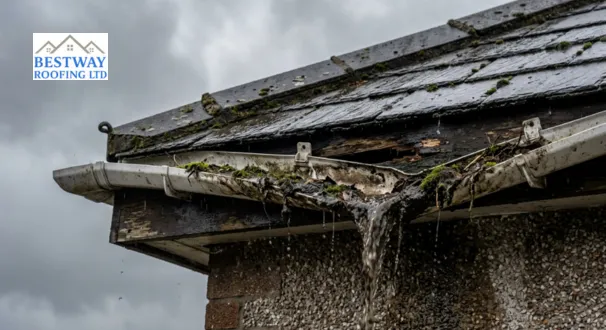
Your roof and guttering work together as one system, so problems with one often point to problems with the other. If your gutters are overflowing during rain, sagging, pulling away from the fascia board, or full of granules washed off worn-out shingles or tiles, it’s often a sign that your roof covering is deteriorating and shedding material faster than it should.
Overflowing or blocked gutters can also cause water to back up under the roof edge, leading to rot in the fascia, soffits, and roof timbers behind them. Addressing guttering issues promptly helps protect not just your roofline, but also your walls and foundations from water damage caused by poor drainage.
Our UPVC fascia and guttering services in Chelmsford can help restore proper drainage and protect your roofline.
7. Damp Smell or Mould in the Loft
A persistent musty or damp smell in your loft space, or visible mould, black spots, or green staining on timbers and insulation, often points to a moisture problem caused by a leaking or poorly ventilated roof. This should never be ignored, as it can affect both the structural timbers of your home and your family’s health, particularly for anyone with asthma or allergies.
Mould thrives in dark, damp, poorly ventilated spaces, so a smell that lingers even on dry days usually means moisture is trapped rather than coming from a one-off spill of rain. A roofer can identify whether the cause is a leak, condensation due to inadequate ventilation, or a combination of both, and recommend the right fix.
If damp is already a concern in your home, our damp proofing services in Chelmsford can help identify and resolve the source of the problem.
8. Cracked, Crumbling, or Leaning Chimney
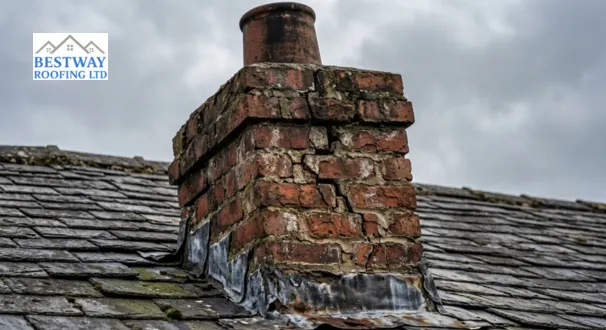
Chimneys are some of the most exposed parts of a roof and are particularly vulnerable to weather damage. Cracked or crumbling mortar between bricks, spalling brickwork, a chimney stack that appears to be leaning, or damaged flashing around the base of the chimney are all common causes of leaks where the chimney meets the roof.
Because chimneys are tall, heavy structures sitting on top of the roof, any movement or instability should be treated as urgent, both for the risk of water ingress and for general safety. Repointing brickwork, replacing damaged flashing, or rebuilding sections of the stack can resolve these issues before they lead to internal damage or a more serious structural problem.
Our chimney repair services in Chelmsford cover everything from repointing to full flashing replacement.
9. Pooling Water on a Flat Roof
If you have a flat roof, such as on an extension, garage, or porch, and you notice water pooling or standing for more than 24 to 48 hours after rain, this is a sign of poor drainage or a sagging roof deck. Flat roofs are designed with a slight fall to direct water towards outlets, and when that fall is lost, water can sit on the surface for far longer than it should.
Over time, standing water adds extra weight to the roof structure and can break down roofing membranes, felt, or coatings, gradually leading to cracks, blisters, and eventually leaks into the room below. Regular checks after rainfall, particularly around drains and outlets, can help catch ponding issues before they cause lasting damage.
Our team specialises in flat roofing in Chelmsford, including repairs and full replacements using durable, weather-resistant materials.
10. Your Roof Is Approaching or Has Exceeded Its Expected Lifespan
Most roofing materials have a typical lifespan. For example, traditional concrete or clay tiles can last 50 years or more with proper maintenance, while felt and some flat roofing materials may need replacing after 15 to 25 years, depending on the type and quality of the material used.
If your roof is approaching or has already exceeded its expected lifespan, even relatively minor issues, such as a few slipped tiles or a small leak, can be a sign that more widespread problems are developing underneath, including deteriorating felt, weakened battens, or ageing flashing. In these cases, a professional inspection can help you understand whether targeted repairs will see you through, or whether it’s more cost-effective in the long run to plan for a full roof replacement.
What to Do If You Notice These Signs
If any of the above sounds familiar, the safest next step is to arrange a professional roof inspection. Climbing onto your roof yourself is dangerous and can sometimes cause more damage, especially if tiles or slates are already loose.
A trained roofer can:
- Carry out a thorough, safe inspection of your roof
- Identify the exact cause and extent of the problem
- Provide a clear, written quote for any required repairs
- Carry out the repair quickly to prevent further damage
Why Choose BestWay Roofing Limited for Urgent Roof Repairs in Chelmsford
At BestWay Roofing Limited, we understand that roof problems don’t wait for a convenient time. Our experienced, fully certified, and insured team provides prompt roof repairs in Chelmsford and the surrounding areas, including Ipswich and Braintree.
We offer:
- Free, no-obligation inspections and quotes
- Fast response times for urgent repairs
- Quality materials and workmanship guarantees
- A full range of roofing services, from minor repairs to complete new roof installations
If you’ve spotted any of the warning signs above, don’t wait for the problem to get worse.
Conclusion
A roof rarely fails without warning. Missing tiles, damp patches, sagging rooflines, daylight in the loft, and damaged guttering are all signs that your Chelmsford home may need an urgent roof repair. The sooner these issues are identified and addressed by a qualified roofer, the less damage, disruption, and cost you’ll face in the long run.
If you’ve noticed any of the warning signs covered in this guide, don’t leave it to chance. A quick call to a trusted local roofing company could save your home from much bigger problems down the line.
FAQs
Q. How quickly should I get a roof repair done once I notice a problem?
As soon as possible. Even small issues like a missing tile or minor leak can worsen quickly, especially during periods of heavy rain or strong wind. Prompt repairs are almost always cheaper than delayed ones.
Q. Can I check my roof for damage myself?
You can do a visual check from ground level using binoculars, or check your loft for signs of light, damp, or daylight. However, climbing onto the roof itself is not recommended without proper training and safety equipment. It’s safer and more accurate to have a professional roofer inspect it.
Q. How do I know if I need a repair or a full roof replacement?
A professional inspection is the best way to find out. If the damage is isolated and the roof is otherwise in good condition, a repair is usually sufficient. If the roof is old, has multiple issues, or shows signs of widespread deterioration, replacement may be more cost-effective in the long run.
