
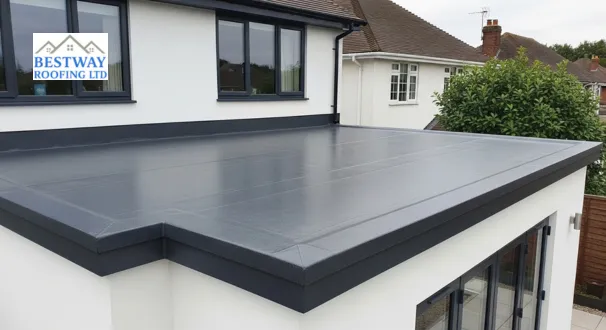
Flat roofs can be covered with several materials, including EPDM rubber, GRP fiberglass, TPO/PVC membranes, modified bitumen, and liquid waterproofing systems. Each varies in lifespan, cost, and maintenance; EPDM and GRP typically last the longest, while bitumen felt is the most budget-friendly.
Flat roofs give you more design flexibility than a pitched roof, especially useful for extensions, garages, and modern-style properties. But they’ve also earned a reputation for being more prone to leaks if you use the wrong material or poor installation. Thankfully, today’s flat roof coverings have moved well beyond old-style felt, and several reliable options hold up far better in UK weather.
Here’s a breakdown of the most common flat roof materials used across the UK, what they cost, how long they last, and which one might suit your property best.
Types of Flat Roof Materials
Technically, a flat roof isn’t completely flat. Most have a very slight pitch, just enough to let water drain off without pooling, but flat enough that any construction fault can quickly turn into a problem. Several flat roof covering types are commonly used, each designed for different needs and budgets. Below is a breakdown of the most reliable materials used by professional Roofers in Chelmsford.
1) EPDM Rubber Roofing
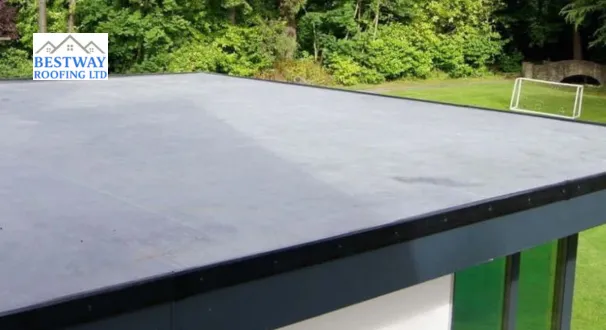
EPDM is one of the most widely used flat roof materials in the UK, known for its long lifespan and minimal maintenance needs. It’s a synthetic rubber membrane installed in large sheets, minimising seams and reducing leak risk. It’s flexible enough to cope with temperature swings without cracking, which is part of why it’s become such a popular choice for residential flat roofs.
EPDM is usually available in black or white. Black is standard and absorbs heat, which can help snow melt faster in colder regions, but it can also make rooms underneath warmer in summer. White EPDM reflects heat instead, keeping the space below cooler, though it’s less commonly stocked and can cost a bit more to source.
- Lifespan: 40-50 years
- Cost: roughly £70-£100 per m²
- Best for: homeowners wanting a durable, low-maintenance option with minimal seams
2) GRP Fibreglass Roofing
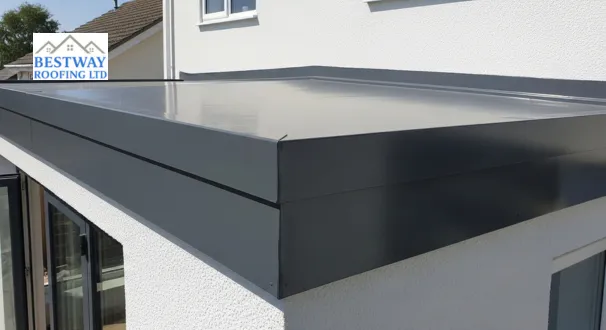
GRP fibreglass offers a seamless, modern finish and is one of the most watertight flat roof options available. It’s created by layering fibreglass matting with resin, which cures into a single, hard-wearing surface. With no joints or seams, the risk of leaks is significantly reduced, and it holds up well in UK weather.
It’s a popular choice for extensions and garages thanks to its clean, contemporary look, though it needs to be installed by a trained professional, and weather conditions can affect the installation.
- Lifespan: 30-40+ years
- Cost: roughly £80-£120 per m²
- Best for: extensions and properties wanting a seamless, contemporary finish
3) TPO & PVC: Single-Ply Membranes
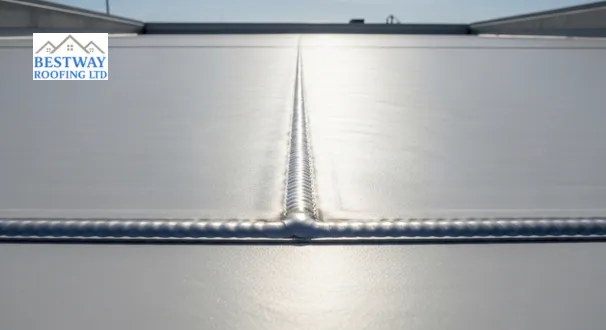
TPO and PVC are reflective “cool roof” membranes that help lower cooling costs while offering solid durability. Both are installed in sheets and heat-welded at the seams for a secure, waterproof bond. Their reflective surfaces bounce back heat rather than absorb it, which can reduce summer cooling costs and cut overall energy use.
They’re not identical, though. TPO tends to have better puncture resistance and stays less slippery when wet, making it a safer option for roofs with occasional foot traffic. PVC, on the other hand, has a longer track record and is often chosen for its chemical resistance, useful for properties near kitchens or extraction systems.
- Lifespan: 20-30 years
- Cost: roughly £60-£90 per m²
- Best for: energy-conscious homeowners or properties needing a reflective, heat-efficient roof
4) Modified Bitumen: Torch-On Felt
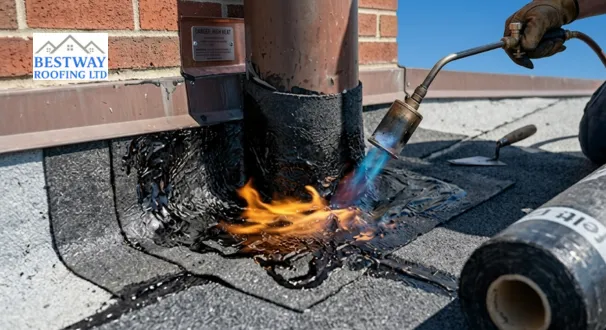
Modified bitumen is a cost-effective upgrade on traditional felt roofing, offering better durability at a budget-friendly price. It’s reinforced with polymers for improved flexibility and applied using heat. It’s more durable than old-style felt but doesn’t match the lifespan of EPDM, GRP, or single-ply membranes.
It remains one of the most affordable options, which is why it’s still widely used, especially for smaller extensions, sheds, or stopgap repairs.
- Lifespan: 15-25 years
- Cost: roughly £40-£70 per m²
- Best for: budget-conscious projects or smaller roof areas
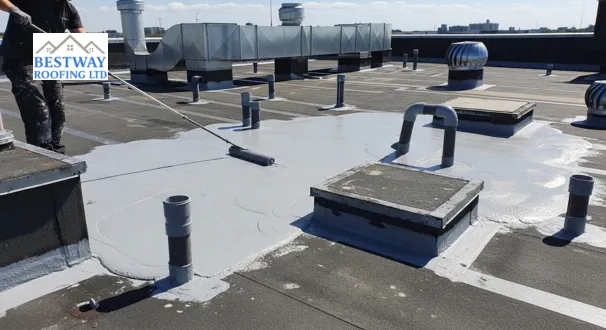
Liquid roofing systems are ideal for awkward roof shapes and repair work where sheet materials aren’t practical. It’s applied as a coating that cures into a seamless membrane, making it especially useful for complex roof details, upstands, and joints where traditional materials are difficult to fit properly.
It’s not usually the first choice for a full new roof, but it’s a strong option for refurbishments or patching problem areas.
- Lifespan: 15-20 years
- Cost: roughly £50-£80 per m²
- Best for: repairs, refurbishments, and complex roof shapes
Comparing Lifespan and Cost of Materials at a Glance
| Material | Lifespan | Cost per m² |
|---|---|---|
| EPDM | 40-50 years | £70-£100 |
| GRP Fibreglass | 30-40+ years | £80-£120 |
| TPO/PVC | 20-30 years | £60-£90 |
| Modified Bitumen | 15-25 years | £40-£70 |
| Liquid Systems | 15-20 years | £50-£80 |
Each material has its place depending on the property type and homeowner expectations. If you are unsure about your budget, it helps to understand how much a new roof costs before making a final decision.
How to Choose the Right Flat Roof Material
- Budget vs long-term value: Cheaper materials like bitumen felt cost less upfront but need replacing sooner. Spending more on EPDM or GRP usually works out cheaper over the roof’s lifetime.
- Weather exposure: For properties in wetter or more exposed areas, seamless options like GRP or liquid systems lower the risk of leaks at joints.
- Appearance: GRP and single-ply membranes offer a cleaner, more modern finish than felt or bitumen.
- Maintenance: EPDM and GRP both require very little upkeep once installed correctly, which suits homeowners who want a low-maintenance roof.
Even the best material won’t perform well if it’s installed poorly. Poor workmanship is one of the most common causes of flat roof leaks, regardless of which system is used. Working with an experienced roofing team who specialise in flat roofing services ensures every layer, seam, and detail is fitted correctly for long-term performance.
At Bestway Roofing – Chelmsford Roofing , we carry out flat roof installations with close attention to detail, using quality materials suited to each property to ensure a durable, weather-resistant result.
Conclusion
Selecting the right flat roof materials is essential for ensuring long-term protection, efficiency, and value. With several systems available, including EPDM, GRP, TPO, modified bitumen, and liquid waterproofing, homeowners can choose a solution that fits their budget and property needs.
For most residential properties, EPDM and GRP remain the most reliable choices due to their durability, low maintenance, and excellent weather resistance.
By working with skilled professionals and choosing the right system, homeowners can ensure their flat roof performs effectively for decades.
FAQ’s
What is the longest-lasting flat roofing material?
For maximum longevity, rubber (EPDM) and metal roofing tend to outperform other options, and both can last anywhere from 30 to 50 years with proper installation and maintenance.
What is the average lifespan of a flat roof?
On average, a flat roof lasts about 20 years, though this varies widely by material. Options like rubber (EPDM) and metal can last significantly longer, often 40 years or more, while modified bitumen tends to wear out sooner, typically within 15 years.
What is the cheapest flat roof option?
Traditional bitumen felt roofing is the cheapest option, offering a low-cost solution for basic flat roof installations, though it has a shorter lifespan than modern systems like EPDM or GRP.
Can water sit on an EPDM roof?
Yes, EPDM is water-resistant, but water should not sit on it for long periods. Standing water can put stress on the membrane and usually indicates drainage issues.
