
A damp patch spreading across your ceiling is usually the first sign that something’s wrong up above. It’s easy to panic, but most roof leaks can be traced with patience and a methodical approach, and even a small drip is worth investigating quickly before it damages timbers or becomes a bigger damp problem.
Here at Bestway Roofing – Chelmsford Roofing , we’re often called out to properties across Chelmsford and the surrounding Essex area where the leak inside the house is nowhere near where the water is actually getting in. Water has a habit of travelling before it shows itself, so knowing where to look, and in what order, makes all the difference.
if you wondered that How to Find a Roof Leak, we’ll walk you through everything from spotting the early warning signs inside your home to safely inspecting your loft for tell-tale evidence, checking your roof from the outside, and running a simple water test to catch those elusive leaks that only show up during heavy rain. We’ll also cover when it makes sense to stop investigating yourself and bring in a professional.
What Are the Early Warning Signs of a Roof Leak Inside Your Home?
Before you touch a ladder or head into the loft, take a walk around your upstairs rooms. A stained ceiling is the obvious clue, but there are subtler signs that often appear first:
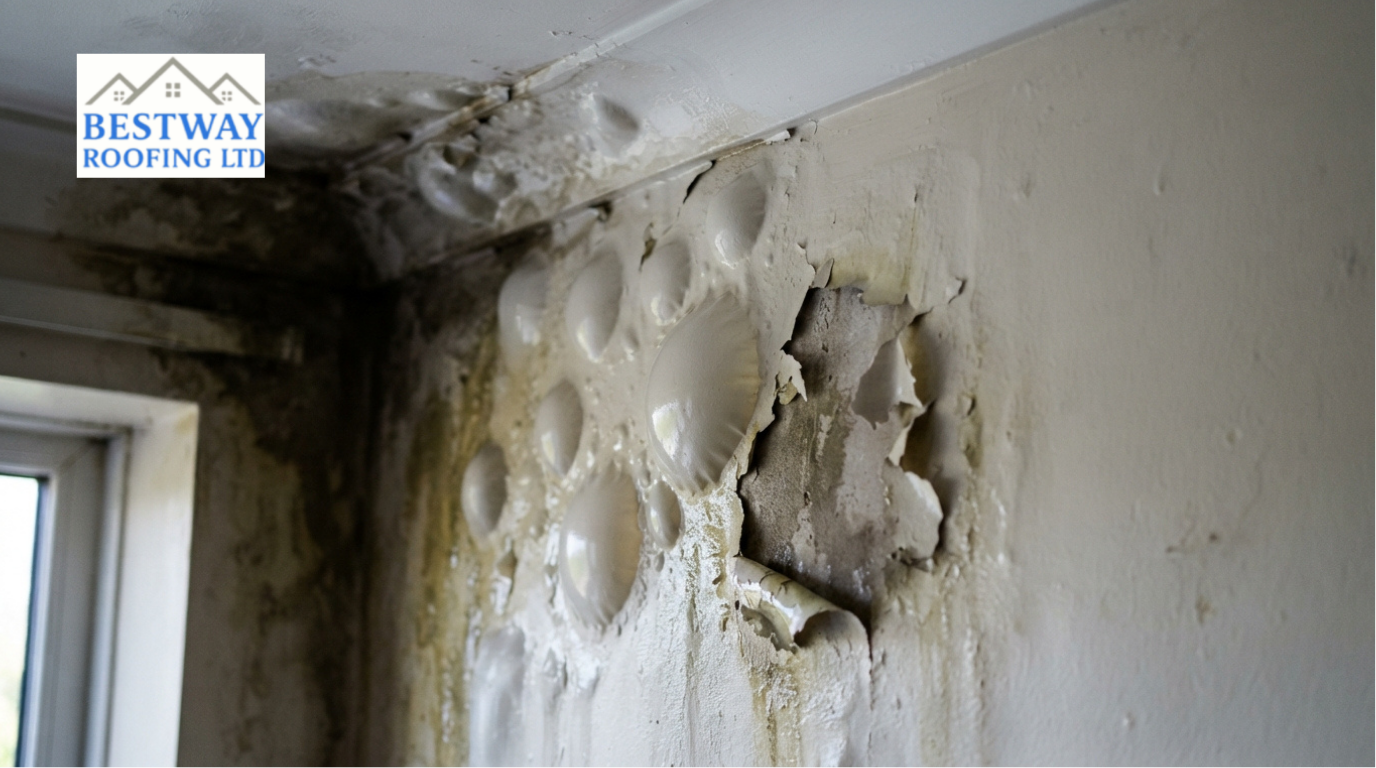
- Peeling or bubbling paint and wallpaper, particularly near ceiling corners or the top of walls, which usually means moisture has become trapped underneath
- A musty, damp smell in a bedroom, cupboard, or loft that won’t shift, even when there’s no visible staining yet
- Audible dripping or damp patches on walls, especially after a heavy spell of rain, which points to an active leak needing urgent attention
| Symptom | Where You’ll Spot It | What’s Likely Happening |
|---|---|---|
| Dark staining or discolouration | Ceilings, upper walls | Water soaking through the plasterboard; darker staining often means an older, slower leak |
| Bubbling or peeling paint | Ceiling corners, around windows | Moisture trapped behind the paint layer |
| Musty odour | Loft, upstairs cupboards | Trapped moisture and possible mould, often a sign of a slow, ongoing leak |
| Visible drips or puddles | Loft floor, ceiling directly | An active leak that needs prompt attention |
How Do You Safely Inspect Your Loft for a Roof Leak?
Your loft is where you’ll find the most direct evidence of a leak, so do this properly. A few safety basics first: never step directly onto the plasterboard between joists, as it won’t take your weight. Lay a board or plank across two or three joists to spread the load, and bring a strong torch rather than relying on your phone.
Once you’re in, switch off the light and let your eyes adjust. Scan the underside of the roof for pinpricks of daylight, though most leaks won’t be this obvious. Then work through the space slowly, looking for:
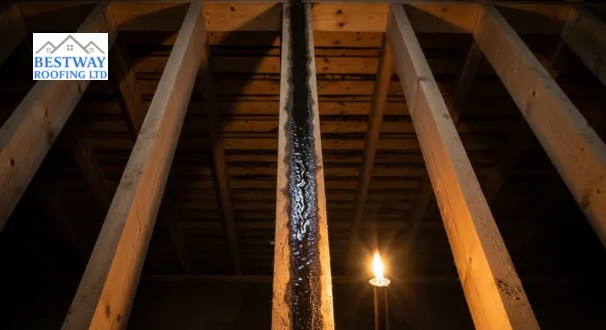
- Darkened or wet-looking timber, where water has trickled down a rafter and left a faint trail
- Damp or flattened insulation, which loses its effectiveness once saturated and is a strong indicator of an ongoing leak
- Rust marks around nail heads, where water dripping through the roof deck has left a tell-tale ring
Pay particular attention to anywhere something passes through the roof structure; chimney stacks, soil pipes, and roof windows are all common weak points. Remember that the entry point on the roof itself is almost always higher up than where the water shows itself inside, since it will run down along the rafters or roofing felt before dripping.
What Should You Check on Your Roof From Outside?
Once you have a rough idea of where the problem lies, it’s time to look at the roof itself. You can do a lot from the ground with a pair of binoculars, and we always recommend leaving ladder work to a qualified roofer rather than risking it yourself.
Use what you found inside as your starting point. If the staining is in the corner of a bedroom, focus your search on that section of roofline rather than scanning the whole roof.
Tiles
Cracked, slipped, or missing tiles, often after a spell of strong wind, leave an open gap for water to get through. This is the most common culprit we come across on Essex homes.
Ridge Line
Deteriorating mortar along the ridge line is another weak point to watch for. Cracking or crumbling here creates a gap right at the peak of the roof, where water can easily work its way in.
Flashing
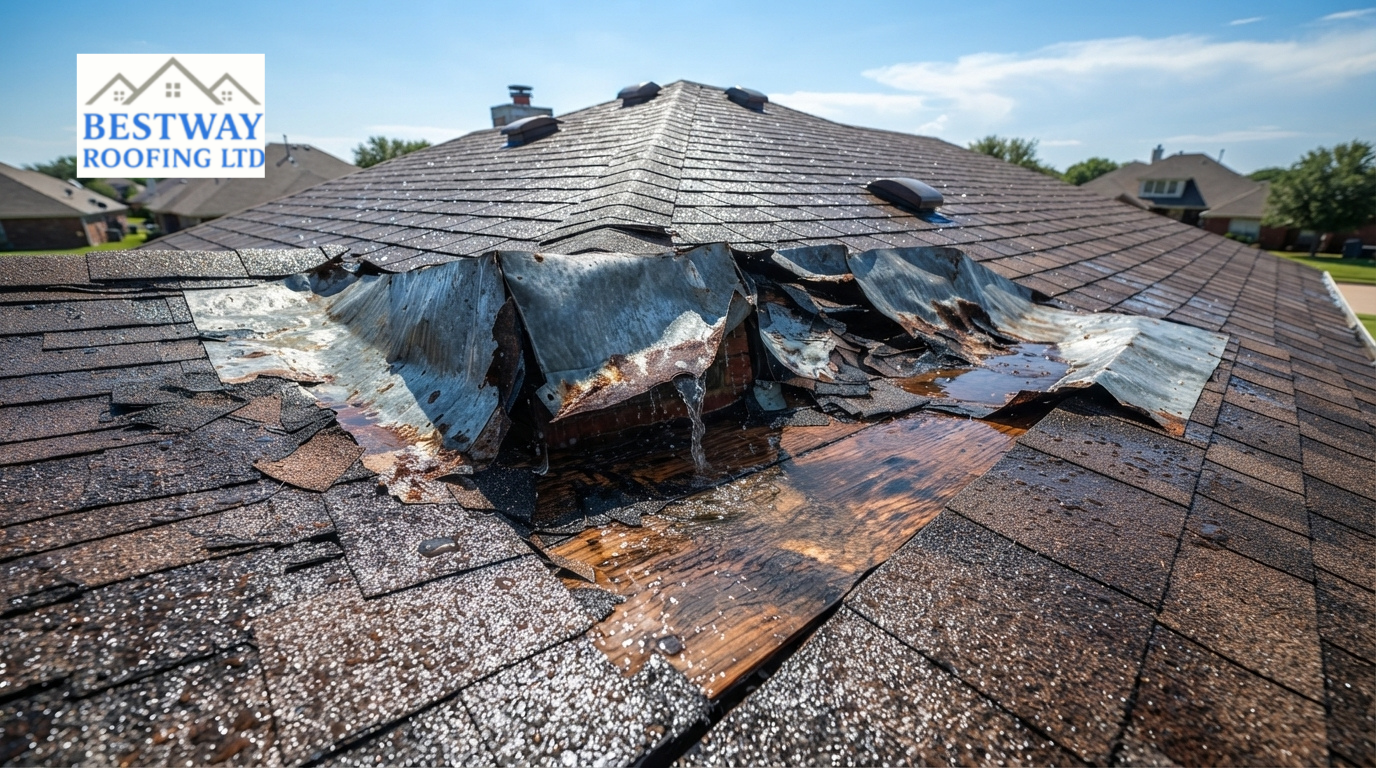
Lifting or cracked lead flashing around chimneys, dormer windows, and soil pipes is one of the most frequent causes of a leak, especially once the seal has failed.
Sealant
Perished sealant around flashing edges is worth checking too. It goes brittle over time and eventually breaks the watertight seal it’s meant to provide.
Even a small defect in flashing can let in a surprising amount of water during a downpour, and it’s often invisible from ground level, which is why a proper inspection sometimes needs a closer look than binoculars can offer.
Running a Water Test for Hard-to-Find Leaks
Some leaks only appear during wind-driven rain, which makes them frustrating to pin down. If your loft and roof checks haven’t turned up an obvious cause, a controlled water test can help isolate the problem area without removing any tiles unnecessarily.
This works best as a two-person job:
- Isolate one section at a time. One person stays in the loft as a spotter while the other runs a hose gently over a specific area, starting low and working upward. Avoid a pressure washer, as you’re aiming to mimic rainfall, not blast the tiles.
- Wait and watch. After a few minutes on one section, the spotter checks the underside of the roof deck for any glisten of water or a new drip.
- Communicate immediately. As soon as anything appears, the spotter should call out or phone the person outside straight away, pinpointing the exact spot.
Working through each suspected area this way, whether it’s flashing, a valley, or a run of tiles, takes the guesswork out of the process.
When to Call a Professional Roofer
Spotting the signs yourself is a useful first step, but most roof repairs are more involved than they look, and working at height without the right equipment carries real risk. It’s worth calling in an expert roofer in Chelmsford straight away if you notice:
- Active dripping or a ceiling stain that’s spreading quickly
- Sagging in the roofline or rotting timbers in the loft
- A leak around a chimney, high gable, or awkward valley that isn’t safe to reach yourself
- You’ve checked everywhere and still can’t find the source
At Bestway Roofing, we carry out a thorough, non-invasive inspection using the clues you’ve already gathered, then provide a clear, itemised quote before any work begins, so there are no surprises later on. We offer full roof repair services across Chelmsford and the surrounding Essex area, so once we identify the source of the leak, we can fix it as well, giving you a complete, lasting solution from inspection through to repair.
BESTWAY ROOFING – Chelmsford Roofing· CHELMSFORD
Found Signs of a Leak, or Hit a Dead End Tracing It?
If you’ve spotted signs of a leak or hit a dead end trying to find the source yourself, contact Bestway Roofing – Chelmsford Roofing. We cover Chelmsford and the surrounding Essex area, and we’re happy to do a full inspection to trace the problem and fix it properly.
Get in TouchConclusion
Roof leaks don’t have to be a mystery. Start inside your home, trace the trail into your loft, then check the outside; most leaks will reveal themselves once you know where to look, and a water test can help settle trickier, wind-driven cases. But some leaks hide in spots that aren’t safe to check yourself, like high gables or complex chimney flashing, so if you’re stuck, contact Bestway Roofing. We cover Chelmsford and the surrounding Essex area and are happy to inspect, trace, and fix the problem properly.
FAQs
How much does it cost to find and repair a roof leak in the UK?
It depends on the cause and how accessible the area is. A slipped tile might only cost a few hundred pounds to fix, while flashing or valley repairs take more time and cost more. We provide a detailed quote after inspection, so you know the cost upfront.
Will my home insurance cover a roof leak?
It depends on your policy. Most insurers cover sudden damage, like a storm ripping off tiles, but not general wear and tear from a slowly developing leak. Check your policy, and if you think you have a valid claim, we can provide a report on the cause to support it.
Why does my roof only leak during heavy, driving rain?
This is a classic wind-driven leak. Strong winds force water into gaps that wouldn’t cause trouble in normal rain, like a hairline crack in a tile or failing sealant around a roof window. These are hard to spot since they’re often invisible from the ground.
How long does it take to fix a roof leak?
Most straightforward repairs, like replacing a tile or resealing flashing, can be done in a day. More complex jobs, such as re-leading a chimney or repairing a valley, may take longer, depending on the extent of the damage and the weather that day.
