
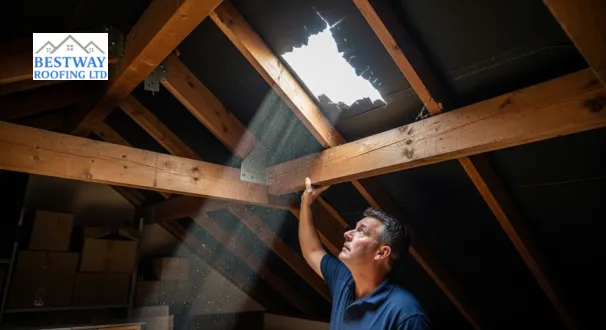
In most cases. You can carry out a basic roof felt repair from inside your loft, especially for small tears, gaps, or minor leaks. That said, this type of roof repair has its limits, and larger or ongoing damage still needs a proper inspection from outside.
The good news is that you can often fix small problems from indoors without much hassle. But there is a limit to what you can safely handle on your own before it becomes a job for a professional.
This guide will walk you through how to check the damage, repair it safely, avoid common mistakes, and know exactly when it’s time to call in help for a full roof repair.
What Is Roof Felt and Why Do You Need It?
Roof felt is the layer beneath your roof tiles. It is not just there to catch dust. It has an important job. It stops wind and rain from getting into your loft. If water gets past your tiles, the felt helps guide it into the gutters instead of letting it soak into the wood.
In older British homes, you will usually find thick, black bitumen felt. This type keeps water out, but it does not let air through. That means damp air can get trapped inside. In newer homes, builders use a breathable membrane instead. This lets moisture escape from the loft while keeping rain out. This helps stop rot and mould.
Knowing which type you have matters because you need the right repair materials. Bitumen felt needs bitumen tape or mastic. Breathable membranes need special glue that works with modern materials.
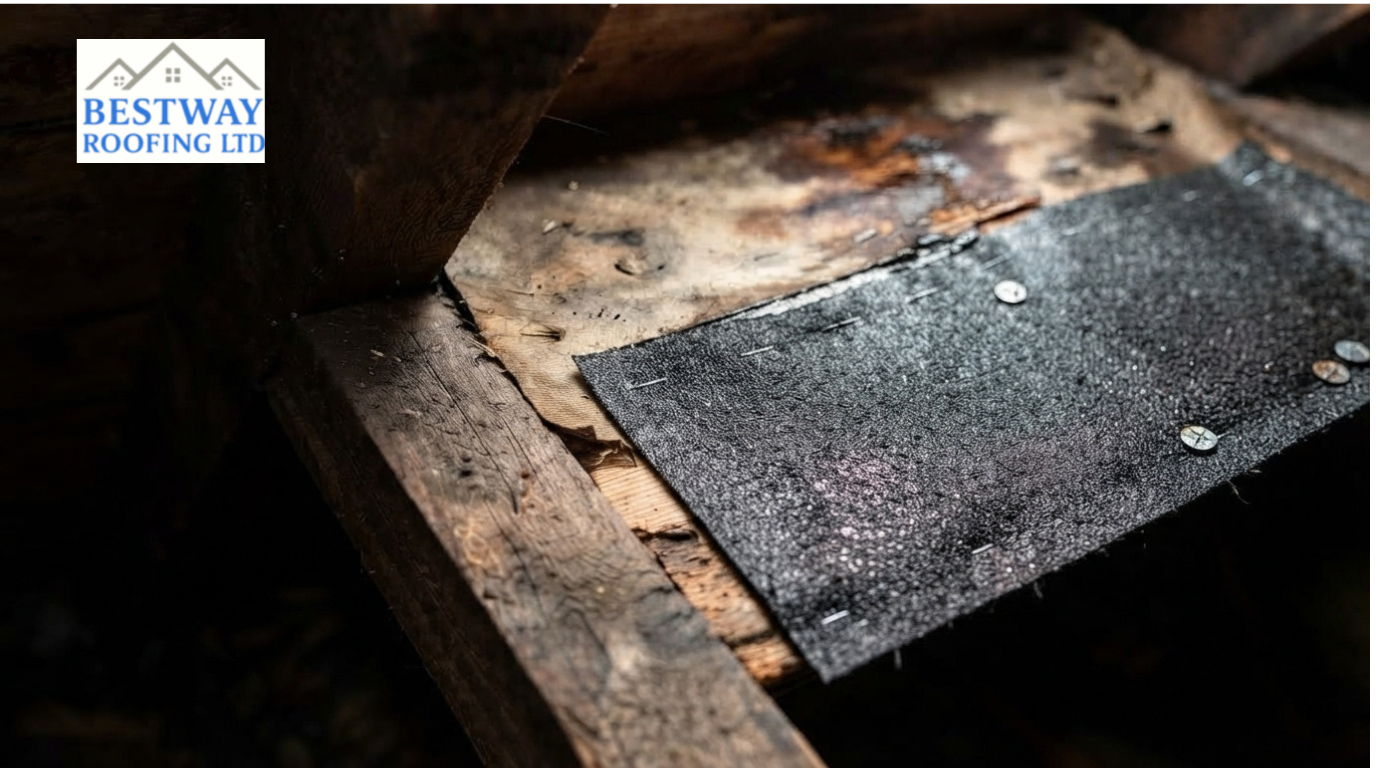
How to Check the Damage Before You Start
Before you pick up any tools, look around carefully. Go into the loft during the day and turn off the lights. Look for tiny dots of daylight coming through the roof. If you see them, that means there is a hole or tear in the felt.
Follow any wet patches on the insulation or wood back to their source. Water can run along the felt before it drips, so the wet spot on the floor might not be directly under the hole. If you are struggling to trace the source, learning how to find a roof leak properly can save you a lot of time.
Ask yourself these questions:
- Is it a small hole or a big tear?
- Is the felt around it still strong, or is it crumbling?
- Are the roof tiles above in good shape, or are some missing?
- Can you reach the damage easily, or is it hidden near the edges?
If the felt breaks apart when you touch it, a patch will not stick. Also, if you can see daylight through the tiles themselves, the real problem is outside. Patching the felt from the inside will not fix that.
How to Repair Roof Felt from Inside: Step by Step
If the damage is small and the surrounding felt is still in good shape, you can patch it from the loft. Here is how to do it the right way.
1. Clear the Area
Move the insulation away from the damaged spot. Wear gloves, goggles, and a dust mask because old felt and loft dust can irritate your skin and lungs. Use a brush or cloth to clean the felt. If it is damp, dry it with an old towel and let it air out. Glue will not stick to a wet or dirty surface.
2. Trim the Edges
Use a sharp knife or scissors to cut away any frayed or loose edges around the hole. This makes the hole a bit bigger, but neat edges help the patch sit flat. It also stops the tear from getting worse.
3. Cut the Patch
Measure the hole and cut a piece of new felt or a repair patch. Make sure it is at least 5 to 7 centimetres bigger than the hole on all sides. If the patch is too small, the corners will peel up within weeks.
4. Spread the Glue
Use a brush to put a thick, even layer of bitumen glue, roofing mastic, or breathable membrane adhesive on both the damaged felt and the back of the patch. Do not be shy with it. Thin spots are where water will sneak in later. Spread the glue a little past the patch edge to create a solid seal.
5. Press and Seal the Patch
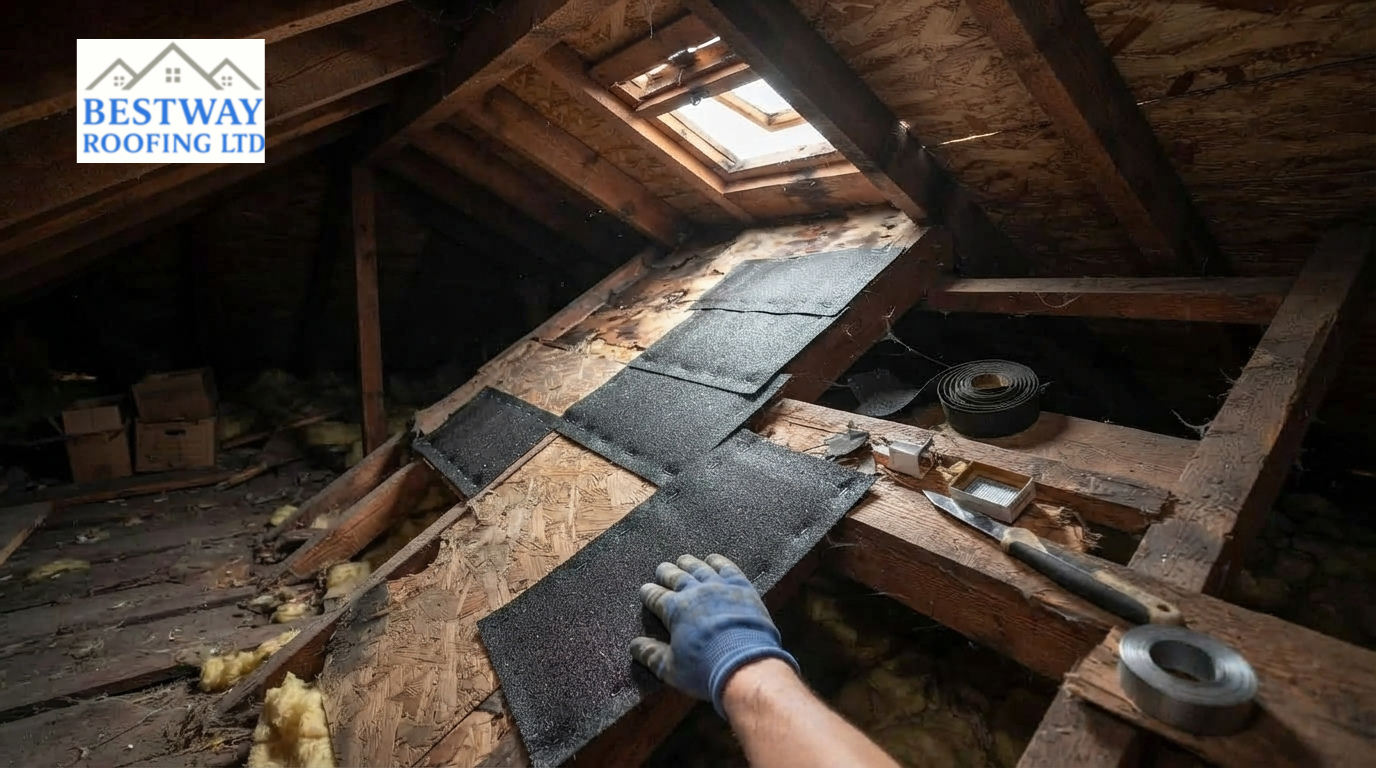
Place the patch carefully. Press from one side to the other to avoid trapping air bubbles underneath. Once it is in place, press down hard all over it. You can use a small roller or a clean piece of wood wrapped in a cloth. Then run a bead of sealant around the edges and smooth it with a spatula or your gloved finger. This edge seal is what keeps the water out.
6. Let It Dry and Put Everything Back
Read the glue packet to see how long it needs to dry. It usually takes a few hours, but in a cold loft it might take a full day. Once it is fully dry, put the insulation back. Check the repair after the next rainfall. If you see any dampness, the patch did not work, and you need to try again or call a roofer.
Common Mistakes to Avoid When Repairing Roof Felt
It is easy to rush a roof repair, but these common mistakes can ruin your hard work:
Using the wrong tape. Duct tape or gaffer tape will not work. They fall apart quickly in a hot or cold loft. Always use proper roofing repair tape or bitumen products.
Patching over wet felt. If the felt is damp, the glue will not stick. You will just trap water against the wood, which leads to rot.
Using a patch that is too small. A patch that barely covers the hole will lift at the corners. The 5 to 7 centimetre overlap rule is important.
Ignoring the roof tiles. If a tile is broken or slipped, water will keep getting in. Patching the felt is like putting a plaster on a leaky pipe. The water will just find another way in. Always check the roof from the ground with binoculars, or ask a roofer to look.
Blocking the air vents. Many British lofts have vents at the eaves to let air flow through. Do not stuff insulation into them. Poor airflow causes condensation, which makes the felt rot faster and can even look like a leak.
Tips to Prevent Roof Felt Damage
If you decide to do the repair yourself, keep these tips in mind:
- Pick a dry day. Cold weather stops glue from drying properly. Trying to fix a leak while it is still raining is frustrating and usually fails.
- Use a head torch. It keeps your hands free and helps you see in the awkward corners of a loft.
- Take photos. Snap pictures before, during, and after. This helps you check if the repair is holding up, and it is useful for insurance or if you sell your home.
- Check your home insurance. Some policies require roof repairs over a certain value to be done by a professional. A bad DIY job might void your cover. Also check whether your home insurance covers roof leaks before you start any work.
- Plan for the future. An internal patch is a short-term fix. Start saving for a proper external repair within the next year or two, especially if your roof is old. Traditional bitumen felt usually lasts 15 to 25 years. Modern breathable membranes can last 30 years or more when fitted properly.
When to Call the Professionals
Some jobs are too big or too dangerous to do yourself. You should call professional roofers in Chelmsford if:
- The tear is large, or there are several holes across the roof.
- The felt is crumbling, sagging, or falling apart.
- You see rotten wood, mould, or woodworm in the rafters.
- The damage is near the eaves where the felt meets the gutter. This is very hard to reach from inside.
- Roof tiles are missing, slipped, or broken.
- You feel unsafe in the loft, or electrical wires are nearby.
A trained roofer can take off the tiles, replace whole sections of felt, fit modern breathable membranes if needed, and replace any rotten wood. They will also ensure the work follows British Standards BS 5534 and BS 5250. These official rules ensure roofs in the UK are built and repaired safely.
At Bestway Roofing – Chelmsford Roofing, we offer dependable roof repair services you can count on. Understanding your roof’s condition helps you make smarter decisions before small issues become bigger ones. Whether it’s a minor internal patch or a full roof inspection, our professional roofers keep your home dry, secure, and built to standard.
Conclusion
A roof felt repair from inside the loft is a handy way to stop a small leak without climbing onto the roof. It works well for tiny holes and tears, as long as the felt around them is still strong and the tiles above are in good shape. But it is not a permanent solution. Roof felt is key to keeping your home dry and safe. If the damage is widespread or if the wood underneath is rotting, you need proper help.
If you are unsure how bad the damage is, speaking to a is the safest next step. A proper check now can save you thousands of pounds in water damage later.
FAQs
How do you repair a roof membrane from the inside?
Breathable membranes need special glue, not old-fashioned bitumen. The steps are the same: clean, dry, patch with overlap, and seal, but check the membrane instructions to make sure you use the right adhesive
How do you fix a small hole in the roof from inside?
For a very small hole, you can use cold-applied roofing mastic alone. Spread it thickly over the hole and smooth it out. For bigger holes, use a patch plus glue and seal the edges.
Can you patch the roof felt from the inside?
You can, but only if the damage is small, the felt is still flexible, and you can reach it easily. If the felt is brittle, the hole is large, or it is near the gutter, an internal patch probably will not work.
Can you repair the roof felt from the inside?
Yes. You can patch small holes and tears from inside the loft using roofing tape, bitumen mastic, or special membrane patches. Just remember, this is usually a short-term fix until a roofer can check the outside.
