
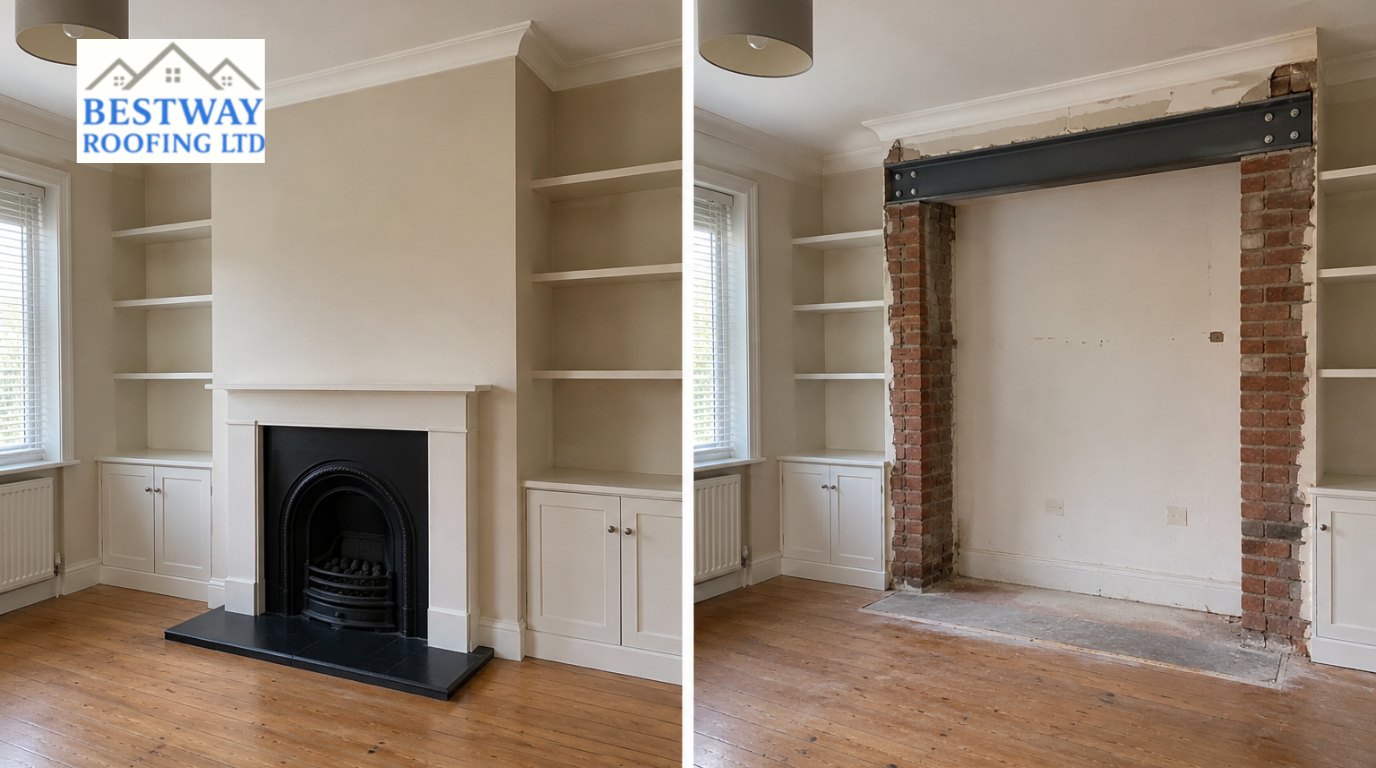
To remove a chimney breast, first hire a structural engineer to assess the chimney and design the support needed. Next, get Building Control approval and serve a Party Wall notice if the chimney is shared with a neighbour. Have a professional confirm the flue is no longer in use, then take down the brickwork from the top down while a steel beam or gallows brackets support the chimney stack above. Finally, make good the walls, floors, and ceiling, and properly seal the roof and stack. Never remove a chimney breast without support, as it can cause the stack above to collapse.
A chimney breast can take up surprising space. In a small living room or bedroom, that bulky column of brickwork can block furniture, disrupt the layout, and make the room feel smaller, so many homeowners consider removing it. However, the job is not as simple as knocking down a wall, because a chimney breast often supports the chimney stack above it, and removing it without proper support can put the whole structure at risk. This guide explains how to remove a chimney breast safely, what the process involves, what it can cost, which permissions you need and when to bring in a professional.
What Is a Chimney Breast?
The chimney breast is the part of the chimney that projects into the room, from the fireplace up to the ceiling. Inside it runs the flue, which carries smoke and gases from a fire or stove up to the chimney stack on the roof. In most UK homes, the breast, flue, and stack form one continuous structure.
Because the stack above is heavy, the brickwork below it often carries structural loads. That is why you can’t treat a chimney breast like an ordinary partition wall.
What Are the Different Ways to Remove a Chimney Breast?
Remove the breast and keep the stack
Support the stack with a gallows bracket or steel beam.
Remove the breast and the stack
Both come down, and the roof is made good.
Remove only the stack
Taken down to roof level, often when it is damaged.
Remove one floor only
Take out the ground-floor breast and support the section above.
What Should You Check Before You Start?
- Whether the flue is shared: A flue may serve another room, another floor or a neighbouring property, and it must not be blocked or damaged.
- Any gas or solid fuel appliances: A qualified engineer must safely disconnect fires, stoves, and boilers connected to the flue.
- Chimney condition: Check for cracks, damp patches, and loose brickwork before any work starts.
- Asbestos: Older properties may contain asbestos in flue liners or fireplace surrounds, which specialists must handle.
- What lies above the room: Check whether bedrooms, a loft, or the roof are above, because each affects how the stack is supported.
Tools and Materials Needed
Tools
- Acrow props and strongboys (for temporary support)
- Club hammer, bolster chisel and cold chisel
- Lump hammer, crowbar and brick bolster
- SDS drill and angle grinder
- Spirit level and tape measure
- Wheelbarrow, rubble sacks and a skip
Materials
- Steel beam (RSJ) or gallows brackets, as specified by your structural engineer
- Bricks, mortar and DPC (damp-proof course) if needed
- Plasterboard, plaster and a bonding agent
- Floorboards or joists for repairs
- Roofing tiles or slates, lead flashing and sealant (if the stack is being removed)
How to Remove a Chimney Breast : Step by Step Process
Step 1: Get a Structural Assessment
Hire a qualified structural engineer to inspect the chimney and the floors above. They will decide how much you can remove and design the support, such as a steel beam or gallows brackets. Building Control will need their calculations, so don’t skip this step.
Step 2: Get Building Control Approval and Notify Neighbours
Submit the engineer’s drawings to your local Building Control team and wait for approval before starting any work. If the chimney breast is shared with a neighbour, also serve a Party Wall notice. Doing this early avoids delays and legal problems later.
Step 3: Check the Flue and Look for Hazards
Make sure the flue is no longer in use and isn’t connected to a boiler, gas fire, or wood burner. Have a Gas Safe engineer confirm this if there is any doubt. Older homes may also contain asbestos in flue linings or fire surrounds, so have anything suspicious tested before you disturb it.
Step 4: Prepare the Room
Clear the room, lift carpets and cover floors and furniture with dust sheets. Seal doorways with polythene to stop dust spreading through the house. Turn off power to nearby sockets and lights if any cables run through the chimney wall.
Step 5: Install Temporary Support
Fit Acrow props and strongboys to support the chimney stack and brickwork above while you remove the breast below. This is the most important safety stage of the whole job. The props must stay in place until you install the permanent support.
Step 6: Remove the Brickwork
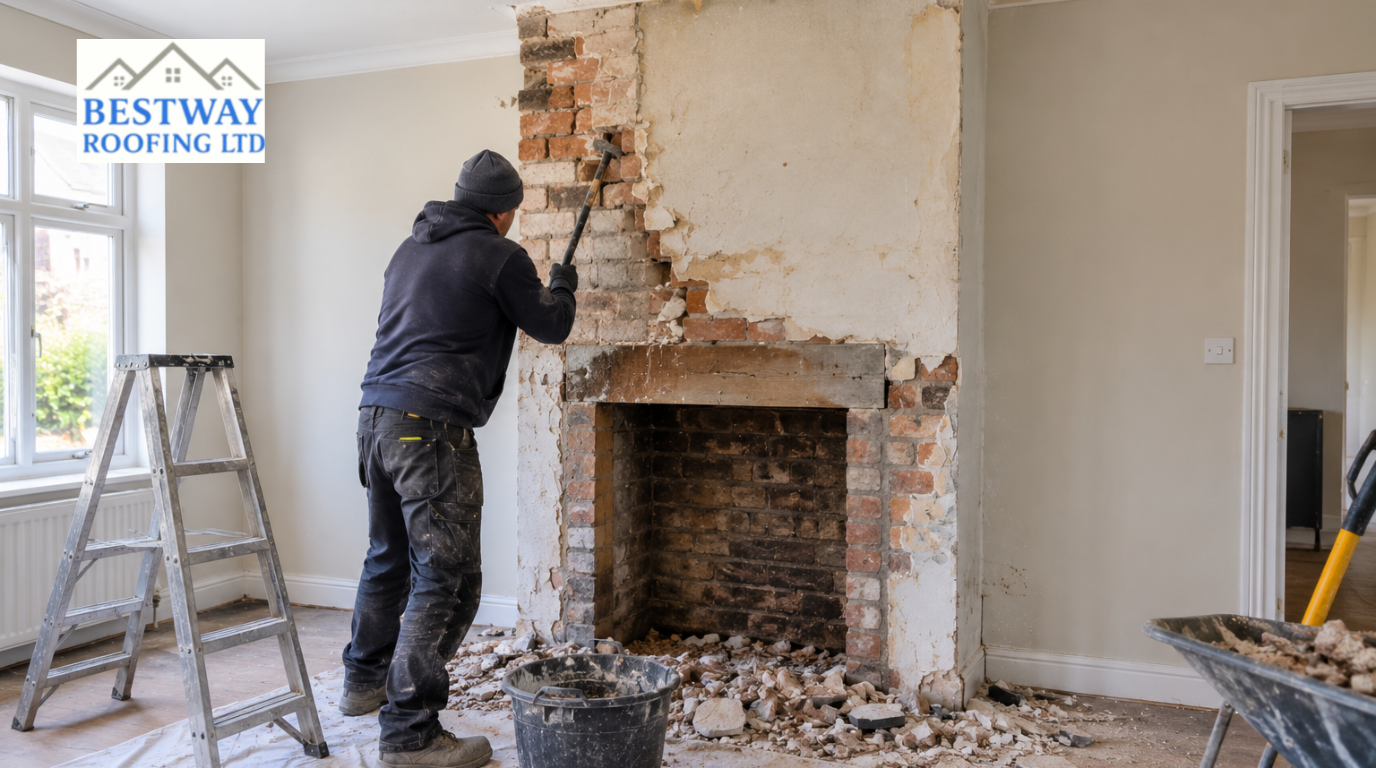
Work from the top down, taking out the bricks a few courses at a time with a club hammer and bolster chisel. Bag the rubble regularly so it does not build up on the floor. Never work from the bottom up, as this can cause the structure above to collapse.
Step 7: Install Permanent Support
Once you’ve removed enough of the breast, install the steel beam or gallows brackets exactly as your engineer specifies. These carry the weight of the remaining chimney stack above. Building Control will normally inspect this stage before you cover it up.
Step 8: Deal With the Chimney Stack and Roof
If you’re taking the stack down, dismantle it from the roof and re-tile or re-slate the area. If it stays, check the flashing, flaunching and pointing for damage. Poor roof work at this stage commonly causes leaks, so use an experienced roofer.
Step 9: Make Good the Walls, Floor and Ceiling
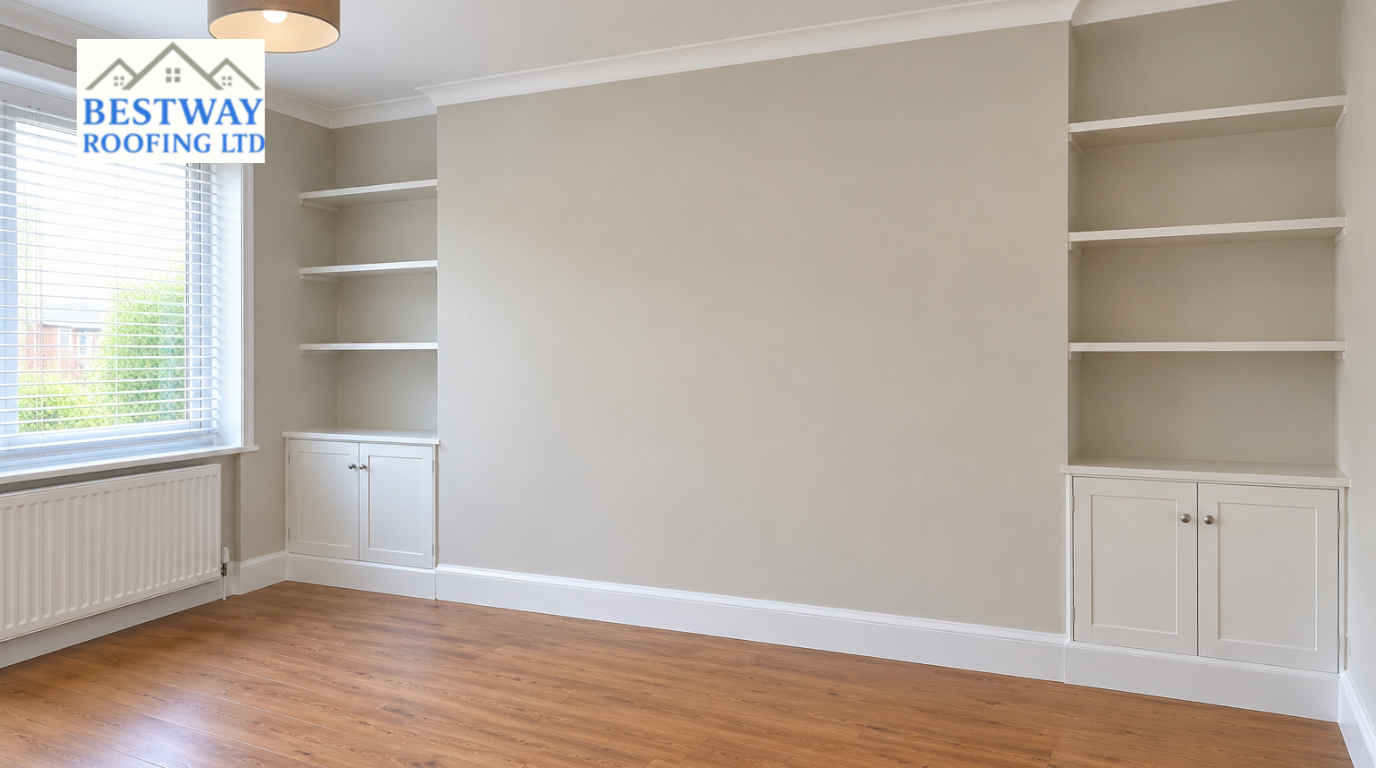
Repair the wall where the breast has been removed, then re-plaster or board it. Patch the floor and ceiling where the chimney passed through. Allow the plaster to dry fully before painting or wallpapering.
Step 10: Final Inspection and Sign-Off
Arrange a final inspection with Building Control and ask for your completion certificate. Keep it safe, because buyers’ solicitors will ask for it when you sell. It also proves the work was done correctly.
Do You Need Permission to Remove a Chimney Breast?
In most cases, you do not need planning permission to remove a chimney breast from inside your home. There are still several approvals and notices to think about:
- Building regulations approval: Because the work is structural, Building Control should sign it off. This normally involves calculations from a structural engineer and inspections during the work.
- Party Wall notice: If your chimney breast is shared with a neighbour, as is common in semi-detached and terraced houses, you may need to serve notice under the Party Wall etc. Act 1996.
- Listed building or conservation area consent: If your home is listed, or the chimney stack is visible from the street in a conservation area, you may need additional consent before any changes are made.
Always check these points before work begins, because skipping them can cause problems when you sell the property.
What happens to the Chimney Stack and Roof After the breast is removed?
Many homeowners overlook this part. The chimney breast is only one part of the chimney, and the stack, flashing, and surrounding roof need just as much attention. Whichever approach you choose, the roof side of the job must be done properly, or you may end up with leaks, damp patches, and ceiling stains within a few months.
This is where an experienced roofing contractor makes a real difference. At Bestway Roofing – Chelmsford Roofing, our team handles chimney repairs across Chelmsford and the surrounding areas, including repointing, rebuilding, flashing repairs, chimney caps and cowls, and chimney stack removal with the roof re-tiled afterwards. If your roof needs work after the stack comes down, our roof repair service will ensure it’s weatherproof and finished to a high standard.
How Much Does It Cost to Remove a Chimney Breast in the UK?
Costs vary widely depending on the breast’s size, the method used, and whether the stack comes down as well. As a rough guide, removing a single chimney breast in one room often costs from around £1,500 to £5,000 or more, with costs rising when more than one floor is involved or when the roof needs rebuilding. These figures are estimates, so always ask for a written quote for your property. The main factors that affect the price include:
- The number of floors: Removing breasts on several floors takes longer and needs more support work.
- The type of support: A steel beam usually costs more than gallows brackets.
- Whether the stack is removed: Taking the stack down adds roofing work to the job.
- Structural engineer fees and Building Control charges: These are separate from the labour and materials.
- Making good: Plastering, flooring, decorating and any damp treatment can add to the final bill.
- Access and waste removal: Rubble from a chimney breast is heavy, and skip hire and disposal are usually included in the quote.
What Mistakes Should You Avoid When Removing a Chimney Breast?
- Removing the breast without support: Without support, the stack above can fall, causing serious damage and danger.
- Skipping Building Control: Unapproved structural work can cause insurance issues and problems when selling your home.
- Blocking a shared flue: Neighbours and other rooms may depend on the same flue, so check before removing anything.
- Forgetting to ventilate remaining flues: A sealed, unventilated flue can lead to damp and condensation.
- Delaying roof work: Complete roof work at the same time as the stack removal to avoid leaks.
- Choosing on price alone: The cheapest quote may leave out support, waste removal or roof work, which can cost more later.
Conclusion
Removing a chimney breast can open up your home, improve your layout and make a room feel larger. It is not a quick DIY job, though. The work is structural, so the safest approach is to start with a structural engineer, get Building Control approval, and ensure the chimney stack is properly supported or safely removed. Do not overlook the roof. A poorly sealed stack or badly finished roof work can lead to leaks and damp later. Planning the internal and roof work together saves time, money and stress.
If you are planning chimney removal or need the roof made good afterwards, Bestway Roofing -Chelmsford Roofing is here to help. Our experienced team handles chimney stack removal, chimney repairs, roof repairs and re-roofing across Chelmsford and surrounding areas.
Call us now, or request your free, no-obligation quote today.
What happens to the chimney stack on the roof?
If you remove it, you must re-tile and seal the roof. If you keep it, check the flashing and pointing for leaks.
Will it affect my insurance or mortgage?
Not if the work is approved and certified. Inform your insurer and keep your certificate of completion.
Who should I hire for the roof work?
Choose insured, experienced roofers. Bestway Roofing Limited handles chimney stack removal, repairs and re-roofing across Chelmsford, Ipswich and Braintree, with free, no-obligation quotes.
Can I remove a chimney breast myself?
Not recommended. The work is structural and needs an engineer’s calculations and Building Control approval.
