
Most homeowners only think about their roof when water starts dripping through the ceiling. By then, the damage is already expensive. The truth is, your roof has been telling you it needs attention for years. You just need to know what to look for.
This guide covers every common UK roofing material’s real lifespan and how to spot problems before they become emergencies. Whether you have a Victorian terrace with clay tiles or a modern extension with a flat roof, you will know exactly how long your roof should last and when to start planning for replacement.
How Long Do Roofs Last?
Pitched roofs in the UK typically last 40 to 60 years, while flat roofs average lifespan is 20 to 30 years. Premium materials like natural slate can exceed 150 years, whereas standard asphalt shingles may need replacing in as little as 15 to 25 years. With proper maintenance, most roofs can last 20% longer than their expected lifespan.
Here is the breakdown at a glance:
| Material | UK Lifespan | Cost per Year* | Best For | Maintenance Level |
| Natural Slate | 80–150+ years | £15–£30 | Heritage, forever homes | Low |
| Clay Tiles | 50–100+ years | £20–£35 | Traditional UK properties | Low-Moderate |
| Concrete Tiles | 40–60 years | £12–£20 | Budget replacement | Moderate |
| Metal Roofing (Steel/Aluminium) | 40–70 years | £18–£28 | Modern builds | Low |
| Metal Roofing (Copper/Zinc) | 100+ years | £25–£40 | Premium/lifetime | Very Low |
| Asphalt Shingles (Standard) | 15–25 years | £25–£40 | Quick fix, sheds | Moderate |
| Asphalt Shingles (Architectural) | 25–30 years | £20–£30 | Modern aesthetics | Moderate |
| EPDM Rubber (Flat) | 25–40 years | £15–£25 | Extensions, garages | Low |
| GRP Fibreglass (Flat) | 25–30 years | £18–£28 | Residential flat roofs | Low |
| Built-up Felt (Flat) | 15–25 years | £20–£35 | Temporary/sheds | Moderate-High |
| Lead Sheet (Flat/Detail) | 50+ years | £22–£35 | Flashing, premium flat | Low |
7 Factors That Affect How Long a Roof Lasts in the UK
No roof lasts forever. Even the best roofing materials slowly wear down over time. However, some roofs fail much earlier than expected because of weather, poor installation, or lack of maintenance.
Here are the biggest things that affect roof lifespan in the UK.
1. British Weather
UK weather can be hard on roofs throughout the year. Heavy rain, frost, strong winds, and damp conditions all put pressure on roofing materials.
In colder parts of the country, water can freeze inside small cracks and slowly damage tiles over time. Coastal areas also experience stronger winds and salty air, which can wear down metal parts more quickly.
Even in places like Chelmsford, regular rain and changing temperatures can slowly weaken an older roof if it is not properly maintained.
2. Installation Quality
A roof is only as good as the person who installs it. Poor workmanship can shorten the life of a roof by many years.
Loose tiles, poor flashing, uneven fitting, and bad ventilation often lead to leaks and damp problems later on. Even high-quality roofing materials will struggle if the installation is done badly.
This is why choosing an experienced roofing contractor is just as important as choosing the right roofing material.
3. Roof Shape and Pitch
The design of your roof also makes a difference.
Steep-pitched roofs usually last longer because rainwater runs off more easily. Flat or low-pitched roofs hold water for longer, which increases the risk of leaks and damp issues.
Complex roof designs with lots of valleys, corners, skylights, or dormers also create more weak points where water can get in.
4. Ventilation and Condensation
Poor ventilation is one of the most common hidden roofing problems in UK homes. Warm air from inside the house rises into the loft. Without proper airflow, moisture builds up and creates condensation under the roof.
Over time, this can lead to:
- mould growth
- rotting timber
- damp insulation
- unpleasant smells in the loft
Good ventilation helps keep the roof dry and prevents long-term damage.
5. Moss and Algae Growth
Moss is very common on roofs, especially in damp or shaded areas. At first, moss may seem harmless. However, thick moss traps moisture against the roof surface and can slowly lift tiles out of place. This allows water to get underneath the roof covering.
Blocked gutters caused by moss and debris can also lead to water overflowing onto walls and roof edges.
Regular roof cleaning helps reduce these problems.
6. Nearby Trees and Surroundings
Trees near your property can shorten the life of your roof more than many homeowners realise.
Overhanging branches can scrape roof tiles during strong winds, while falling branches may crack slates or damage gutters. Leaves also block gutters quickly during autumn.
Shaded roofs usually stay damp for longer after rain, which creates the perfect conditions for moss growth.
Keeping branches trimmed back can help protect your roof.
7. Roof Maintenance
Regular maintenance makes a huge difference to roof lifespan.
Small problems are much cheaper to fix when they are caught early. A slipped tile or blocked gutter may seem minor now, but ignoring it can eventually lead to leaks, damp, and expensive structural repairs.
Simple maintenance jobs include:
- clearing gutters
- checking flashing
- removing moss
- replacing damaged tiles
- inspecting the roof after storms
Roof Repair or Replacement: How to Make the Right Choice
Many homeowners struggle to decide whether they should repair their roof or replace it completely. One of the key factors in this decision is how long does a roof last and whether the roof is still within its expected lifespan or already near the end of it. In most cases, the decision depends on how old the roof is and how serious the damage has become.
If the problem is small, a repair is usually enough. Cracked tiles, a small leak, or damaged flashing around a chimney can often be fixed without replacing the whole roof. A professional roof repair service can handle these issues quickly and help prevent further damage.
Repairs are normally the better option when the rest of the roof is still in good condition. They also cost much less than a full roof replacement and can add several more years to the life of your roof.
However, some roofs reach a point where repairs are no longer worth the money. If your roof has repeated leaks, sagging areas, widespread tile damage, or signs of structural wear, replacing it may be the smarter long-term solution. At that stage, having a clear idea of what a new roof costs can make the decision much easier.
Ignoring major roofing problems can lead to expensive issues later. Water can damage timber, insulation, ceilings, and even cause damp or mould inside the home. In some cases, delaying repairs can also increase energy bills because wet insulation stops working properly.
Experienced roofers in Chelmsford can inspect your roof and explain whether a repair will solve the problem or if a full replacement would be the safer and more cost-effective option.
Warning Signs Your Roof Is Failing
Your roof rarely fails without warning. It sends signals weeks, months, even years before water starts dripping through your ceiling. The trick is knowing what to look for and acting before a small problem becomes a £5,000 repair bill.
What to Look For From Outside
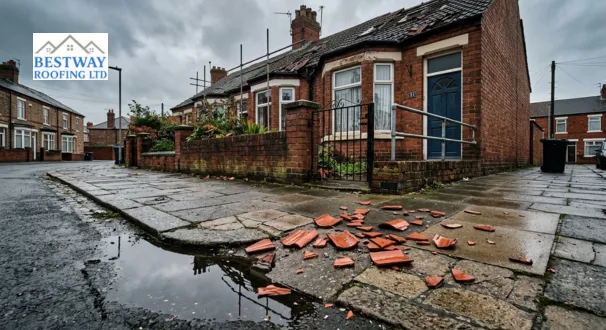
Start with a simple walk around your house. You do not need a ladder for most of this.
Missing or Damaged Tiles
Missing or damaged tiles are the most obvious warning. Even one slipped slate lets wind and rain in underneath. After every storm, look up at your roof from the pavement. High winds dislodge tiles more often than people realise. Check the ground too fallen fragments mean something has come loose up top.
Sagging Roofline
A sagging roofline is serious. Stand across the street and look at the ridge, the line running along the top of your roof. It should be straight as a ruler. Any dip or sag means the timber underneath is weakening. This is not a cosmetic issue. A sagging roof can collapse without warning. Call a professional immediately.
Thick Moss Growth
Thick moss is another red flag. A light dusting is normal on British roofs. But when moss forms a thick carpet in the gaps between tiles, it is actively lifting them. Moss holds water against the surface. In winter, that water freezes, expands, and cracks the tile. If you see moss growing on the vertical walls of dormers, your roof is staying damp for days after rain. That is not right.
Chimney and Flashing Damage
Check your chimney too. The cement between the bricks and the flashing where the chimney meets the roof are the two most common leak spots on any UK house. If the mortar is crumbling or the flashing has pulled away, water is getting in behind the brickwork and running down into your loft.
Daylight Visible in the Loft
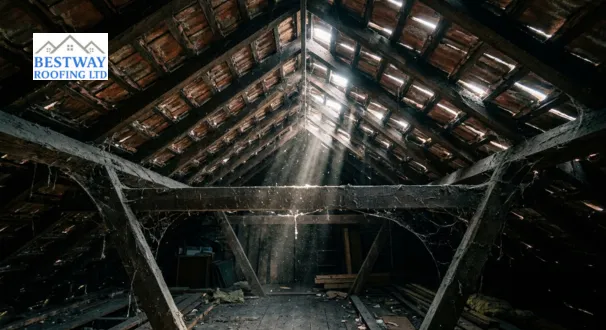
One last external check: go into your loft during daylight and turn the light off. Look up. Do you see daylight coming through the main field of the roof? Small gaps at the ridge are normal. They help with ventilation. But daylight anywhere else means gaps that rain will find just as easily.
What to Look For From Inside
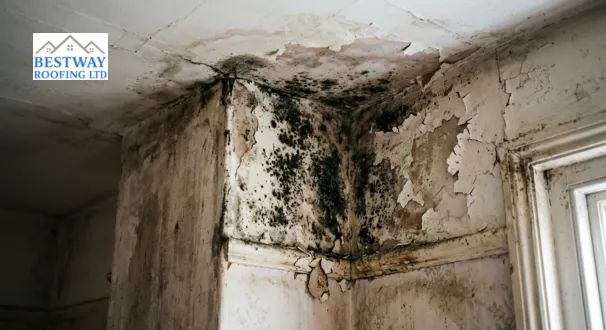
Some of the most important signs are inside your home, not outside.
Water Stains on Ceilings or Walls
Stains on upstairs ceilings are the classic signal. Brown or yellow marks mean water has already got through. Even small stains that seem to dry up in summer are serious. They mean the leak is active every time it rains. The water is just evaporating faster in warm weather.
Damp or Damaged Loft Insulation
Go up into your loft and check the insulation. Lift a section. It should be dry and fluffy. If it is damp, compressed, or smells musty, water is getting in somewhere. Wet insulation does nothing for your energy bills. Worse, it hides rot in the timber underneath.
Rotting Timber in the Loft
While you are up there, look at the rafters the wooden beams that hold the roof up. Healthy timber is light brown and solid. If you see dark patches, soft spots, or timber that crumbles when you press it with a screwdriver, rot has set in. This is a structural problem. It needs immediate professional assessment. Do not wait.
Musty Smells and Hidden Mould
Finally, trust your nose. A persistent musty smell in upstairs rooms means mould is growing somewhere. Check behind furniture, inside eaves cupboards, and in the loft itself. Mould spores are a health risk, especially for children and anyone with asthma or breathing problems.
Practical Tips to Make Your Roof Last Longer
Regular Roof Inspections by a Professional Roofing Company
Get your roof checked every 1–2 years by a professional roofing company. Early inspection helps catch small issues like loose tiles or leaks before they turn into expensive repairs.
Keep Gutters Clean and Free from Blockages
Blocked gutters cause water to overflow and damage roof edges. Clean them at least twice a year to prevent damp and leaks.
Check Your Roof After Storms or Heavy Rain
After bad weather, quickly check for missing tiles or visible damage. Even small issues can let water inside if ignored.
Plan Ahead for a New Roof Installation
If your roof is old or needs frequent repairs, start thinking about a new roof installation. It is often cheaper long-term than constant patch repairs.
Never Ignore Small Roofing Problems
Small leaks or slipped tiles always get worse over time. Fixing them early saves money and prevents serious damage.
Conclusion
Your roof is one of the most important parts of your home, yet it is often ignored until a problem appears. The truth is, every roof has a limited lifespan, and how long it lasts depends on the material, the weather, and how well it is maintained.
If you understand the warning signs early, you can avoid costly damage and plan ahead instead of dealing with emergencies. Small issues like slipped tiles or blocked gutters may not look serious, but over time they can lead to leaks, damp, and structural damage.
The key is simple regular care and timely repairs always cost less than major roof work later on. A well-maintained roof can easily last decades longer than a neglected one.
If you are unsure about the condition of your roof, it is always worth getting a professional roofers opinion before small problems turn into expensive repairs.
Frequently Asked Questions
Q. Can a roof last 100 years?
Yes. Natural slate, high-quality clay tiles, copper, and zinc can all exceed 100 years with proper installation and maintenance. Many Victorian houses in the UK still have their original slate roofs from the 1800s. The key is the material quality, the installation standard, and keeping up with minor repairs before they become major problems.
Q. How often should I have my roof inspected?
At least every 2 years, ideally annually. In the UK, autumn inspections are most valuable because they prepare the roof for the harsh winter weather. A professional inspection costs £100–£200 and can spot problems that save you thousands in water damage repairs.
Q. How long does a flat roof last compared to a pitched roof?
Flat roofs typically last 20 to 30 years, while pitched roofs last 40 to 60+ years. Flat roofs are more vulnerable to standing water, UV exposure, and thermal movement. However, modern materials like EPDM rubber (25–40 years) and GRP fibreglass (25–30 years) have closed the gap significantly compared to old-fashioned felt (15–25 years).
Q. Does a new roof add value to a Chelmsford house?
Yes. A new roof can add up to 5% to your property value and significantly improves buyer confidence. In competitive markets, houses with new roofs sell faster and attract stronger offers. The return on investment is approximately 60–70%, meaning you recover most of the cost while avoiding buyer negotiations over roof condition.
Q. Do I need Building Regulations approval to replace my roof?
Yes, if you replace more than 25% of your roof area within 12 months, you need approval under Part L of the Building Regulations. This also triggers a requirement to upgrade insulation to current standards. The upgrade adds £1,000–£3,000 but saves £200–£400 per year on heating. A reputable roofing contractor will handle the Building Control application for you.
