
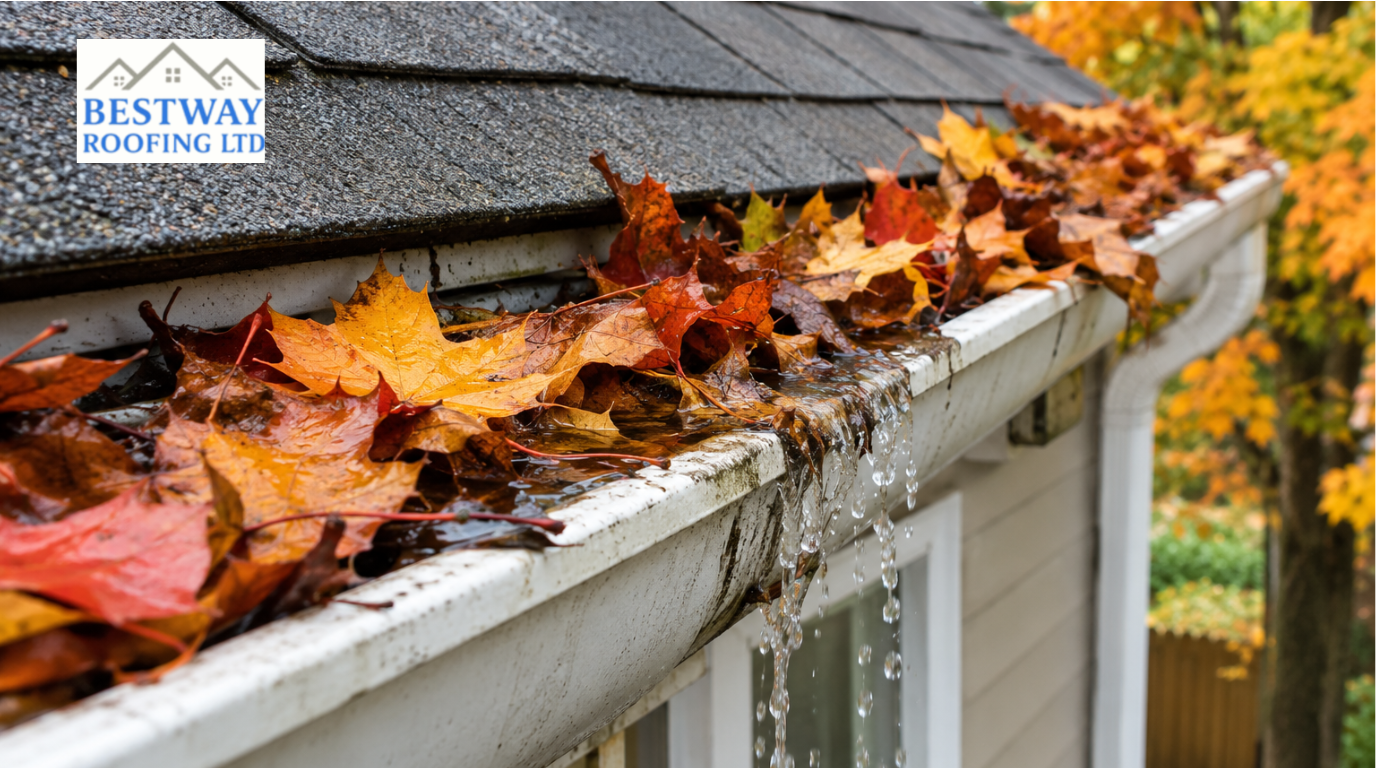
Quick Answer: Braintree sits in north Essex, which is drier than much of the UK but still gets heavy autumn downpours, and many homes sit close to mature trees in gardens and along streets. That means wet leaves often land in the gutters as the first proper storms arrive. The most frequent autumn gutter problems in Braintree homes are leaf and moss blockages, overflowing water, leaking joints, sagging gutters and clogged downpipes. Clearing the gutters after the leaves drop, and checking them during heavy rain, will catch most faults early. Gutters that sag, split or keep overflowing after a clean usually need a professional repair or replacement.
A single heavy autumn downpour is often enough to show which gutters were already struggling. Water spilling over the edge, a drip at a corner or a gutter tilting at an angle are all signs of a fault that will only get worse once winter weather arrives. This guide explains what to look for, the damage they can cause, and when a simple clean is no longer enough.
Why Autumn Is the Hardest Season for Gutters
Autumn combines the two things gutters cope with least: plenty of debris and plenty of water. As trees shed their leaves, twigs, seeds and moss collect in the channel, and wetter weather turns that debris into a heavy, saturated mass.
Many homes in and around Braintree sit close to mature trees in gardens, along streets and beside green spaces, so leaf fall reaches the roofline quickly. Older properties often have tired guttering, with worn seals and loose brackets that struggle with the extra weight and water.
Common Autumn Gutter Problems
Blocked Gutters
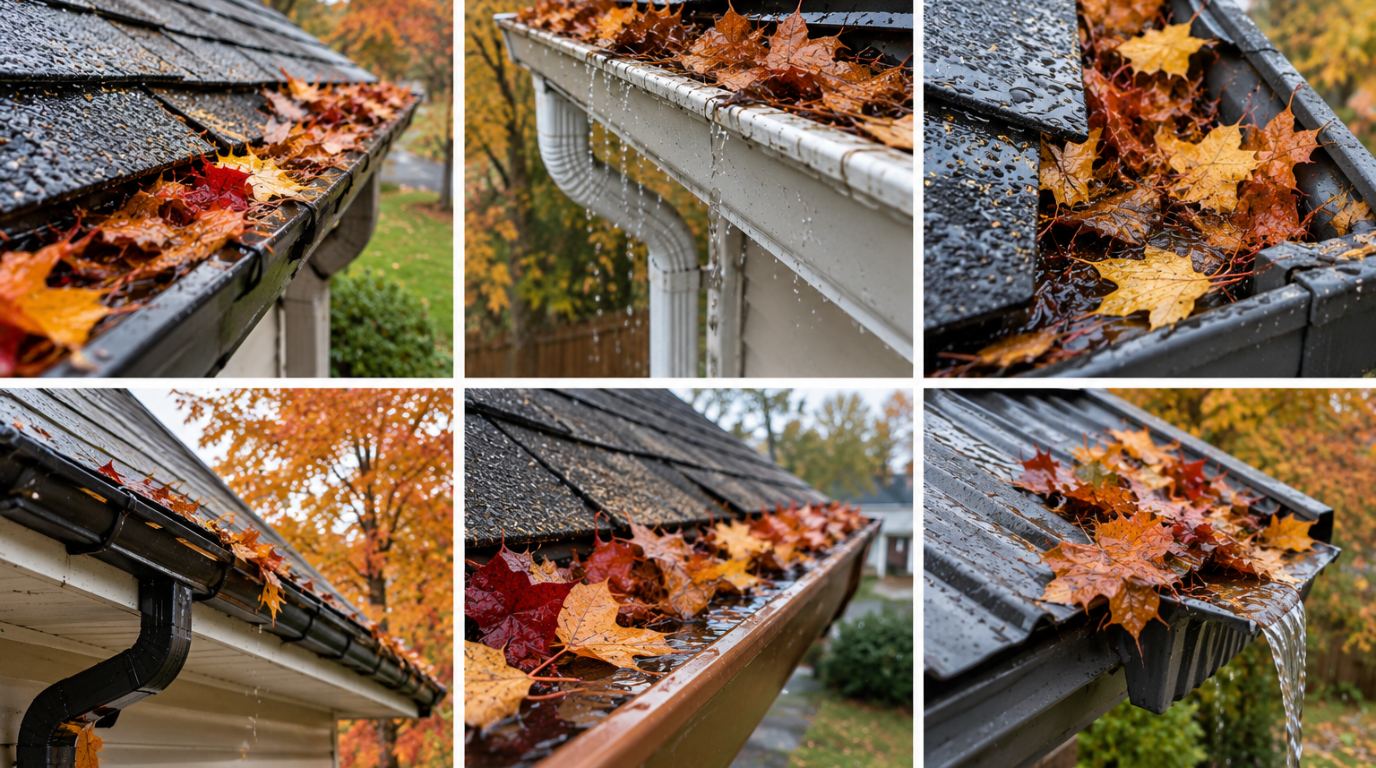
Leaves combine with moss, roof grit and silt to form a thick sludge that holds water back. Once the channel is full, rainwater has nowhere to go. Tufts of moss or small plants along the gutter edge are often visible from the ground and show debris has been sitting there for a while.
Light Blockage? Check It Safely
If the blockage is light and you want to clear it safely, our guide on preparing your roof for autumn outlines simple checks you can do from the ground.
Overflowing Gutters
When the channel or the outlet is clogged, water spills over the front edge or runs down the wall behind the gutter. In rain, you may see a curtain of water falling from the roof edge, dark streaks on the wall beneath the gutter line, or splash marks on the ground next to the house.
Leaking Joints and Corners
Guttering is made in sections joined with seals. Those seals dry out over time, shift with temperature changes, and strain under the weight of wet debris. Autumn rain tends to expose the weak spots first, usually as drips at joints, corners and stop ends.
Quick Tip
Small Drip or Bigger Problem?
A small drip can often be cured with the right product, as explained in our guide to sealing leaking gutter joints. If a joint keeps leaking after you reseal it, the section has probably shifted or cracked and needs replacing.
Sagging or Loose Gutters
Wet leaves are heavy. A gutter full of sodden debris can bend between its brackets or pull away from the fascia. Once it sags, water collects in the dip instead of flowing toward the downpipe, making overflow more likely. If the gutter is pulling away, the fascia board behind it may also be soft or rotten and unable to hold the fixings.
Blocked Downpipes
Debris washes along the gutter and can jam the outlet, a bend in the downpipe or the drain at the bottom. The giveaway is a gutter that looks clear but still overflows, or water backing up at the downpipe joints and pooling at the foot of the wall.
Standing Water in Gutters
Gutters are fitted with a slight fall towards the downpipe. If a section has settled or the brackets have moved, water stops draining and sits in the channel after the rain has stopped. Wet leaves and silt then settle in the same spot, and the blockage builds faster. Standing water also adds weight, which can drag the gutter further out of line.
Cracked or Split Gutter Sections
Ageing gutters can become brittle, and wet debris can crack them, especially at joints and bends. A crack may only drip at first, but it lets water run down the wall or onto the fascia behind. Cracked sections rarely stay sealed for long and normally need replacing.
How Overflowing Gutters Damage Your Property
A gutter problem rarely stays in the gutter. Water that escapes the system soaks parts of the building that should stay dry.
| Area affected | What you may notice | What it can lead to |
|---|---|---|
| Fascia and soffits | Flaking paint, dark staining, soft timber | Rotten boards that have to be replaced |
| External walls | Green or black streaks, damp patches below the gutter line | Moisture passing through the masonry and appearing indoors |
| Roof edge | Water creeping back under the bottom row of tiles or felt | Leaks in the loft or on ceilings |
| Base of the walls | Standing water or mud splashes up the brickwork | Ground and masonry beside the house that stays wet |
Water running down a wall can eventually show up inside as damp, so it helps to know what you are looking at.
Signs Your Gutters Need Attention This Autumn
Many problems are visible from the ground, with no climbing needed. A short walk around the house during or just after rain will reveal most of them.
Don’t wait for the next downpour
If these signs sound familiar, contact Bestway Roofing – Chelmsford Roofing and our team will inspect your gutters before the damage spreads.
Call Us NowIf any of these signs sound familiar, don’t wait for the next downpour. Contact Bestway Roofing Limited and our team will inspect your gutters before the damage spreads.
Should You Clean, Repair or Replace Your Gutters?
Not every fault means new guttering. What you can see usually points towards the right fix.
| What you can see | Usual solution | Verdict |
|---|---|---|
| Leaves and silt only, with the gutter still level and watertight | Clear the channel and flush it through | Clean |
| A drip from a single joint or corner | Reseal the joint or fit a new seal | Repair |
| A gutter sagging between brackets or pulling away from the fascia | Refix or replace the brackets and check the fascia is sound | Repair |
| Cracked, split or warped sections | Replace the damaged sections | Replace |
| Leaks in several places, rotten fascia, or a run that no longer slopes towards the outlet | Replace the guttering, often alongside fascia and soffit work | Replace |
Once damage spreads across several sections, replacing the guttering is usually better value than paying for repeat repairs. Our uPVC fascia and guttering service covers gutter repairs, new gutters and downpipes, plus fascia and soffit replacement, so we can deal with the whole roofline in one visit.
When to Call a Professional
Cleaning and minor sealing are jobs many homeowners can manage. Call a professional roofer in Braintree when gutters sag, pull away from the wall, have cracked sections, keep overflowing after a clean, sit against soft fascia, or are at a height you can’t safely reach from the ground. Getting these faults fixed before winter stops a small repair from turning into rotten timber or damp indoors.
Bestway Roofing – Chelmsford roofing is a reliable roofing company with 30 years of experience, covering Braintree, Chelmsford, Ipswich and the surrounding areas. Our certified, insured team will inspect your gutters, explain the cause, and provide clear pricing before any work begins. Whether you need a clean, a repair or a full replacement, we do the job properly and leave your property clean and tidy. Quotes are free and come with no obligation.
Conclusion
Autumn gutter problems in Braintree homes nearly always start with debris and water with nowhere to go. Blocked channels lead to overflow; overflow soaks the fascia and walls, and the extra weight drags gutters out of line. Walking around the house in the rain, clearing leaves once they have fallen and fixing small leaks early are the easiest ways to avoid bigger repairs. When gutters are cracked, sagging or failing in several places, replacement is the more dependable fix.
FAQs
Do I need permission to replace gutters on a listed building or in a conservation area in Braintree?
It depends on the property. Like-for-like repairs are often straightforward, but changing the material or look of guttering on a listed building usually needs listed building consent, and conservation areas can bring extra rules. Check with Braintree District Council before you start work.
Can I connect a water butt to my downpipe?
Yes, in most cases. A diverter kit fitted to the downpipe sends rainwater into the butt and returns the flow to the drain once the butt is full. Make sure the overflow drains away from the walls; otherwise, you’re just moving the problem from the gutter to the foundations.
Will home insurance cover gutter damage?
Buildings insurance may cover damage from a sudden event such as a storm, but insurers often refuse claims for wear and tear or lack of maintenance. Read your policy wording and keep records of any gutter work you have had done.
Are cast iron gutters better than uPVC for an older home?
Cast iron suits period properties where original character matters, but it is heavy, costs more and needs repainting to resist rust. uPVC is lighter, cheaper and low maintenance, which is why it is the more common choice for everyday homes.
