Flat roofs are a popular choice for extensions, garages, commercial buildings, and increasingly, modern homes across the UK. But “flat roof” isn’t a single product; it’s a category that covers several very different materials, each with its own lifespan, installation process, and maintenance needs. Choosing the wrong one can mean a shorter lifespan, more frequent repairs, or recurring leaks.
In this guide, we’ll cover the most common types of flat roofs used in the UK, their pros and cons, how long each typically lasts, and how to decide which is right for your property.
What Is a Flat Roof?
A flat roof isn’t perfectly level; it has a slight pitch, usually between 1 and 10 degrees, to allow rainwater to drain off rather than pool on the surface. Flat roofs are common on extensions, garages, dormers, porches, and increasingly on full residential builds, thanks to their clean, modern look and lower construction cost than pitched roofs.
The material used to cover a flat roof makes a significant difference to how long it lasts, how much it costs, and how much upkeep it needs. For tips on keeping yours in good shape, see our guide on maintaining a flat roof.
Types of Flat Roofs
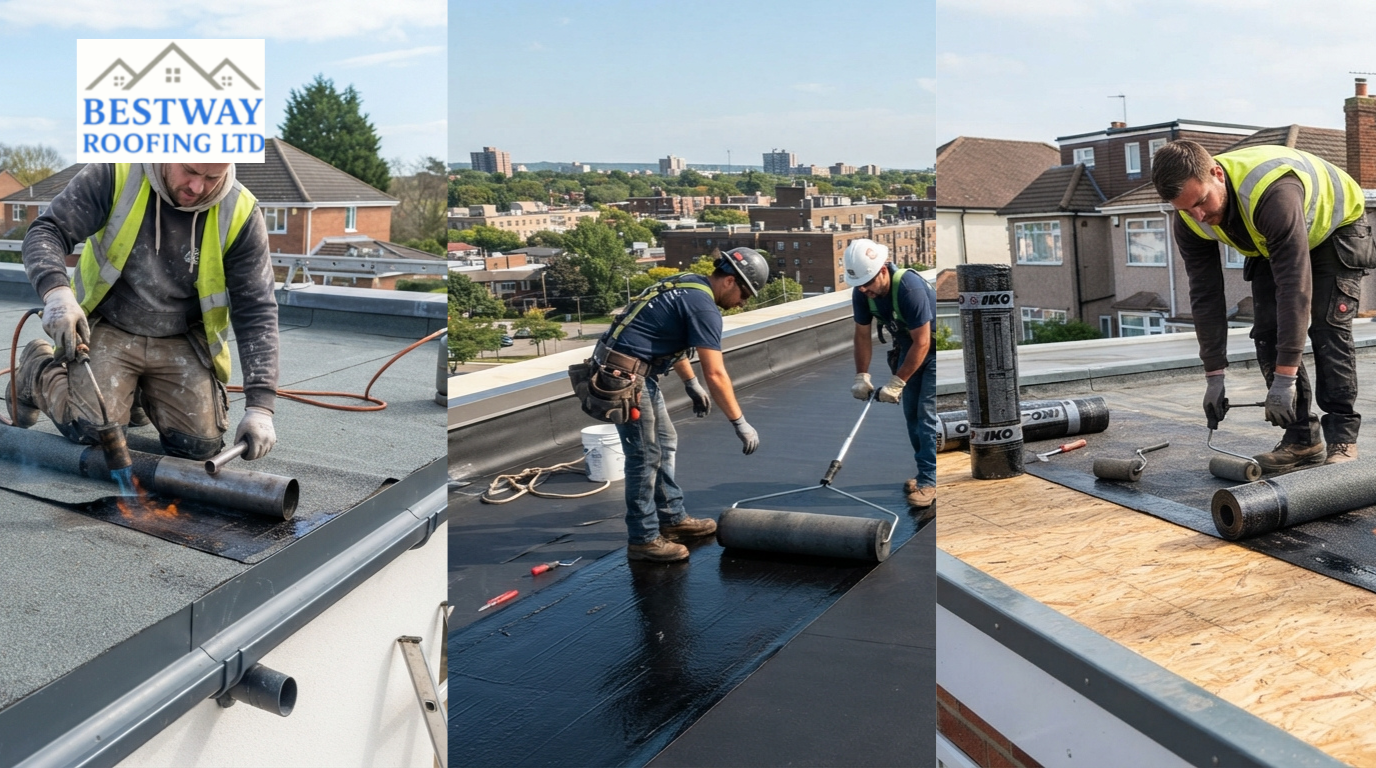
Felt roofing is one of the oldest and most widely used flat roofing materials in the UK, valued for its affordability and simple installation. Many roofing experts still recommend it for smaller, budget-conscious projects that need a straightforward, reliable solution.
1. Felt Roofing (Built-Up Felt)
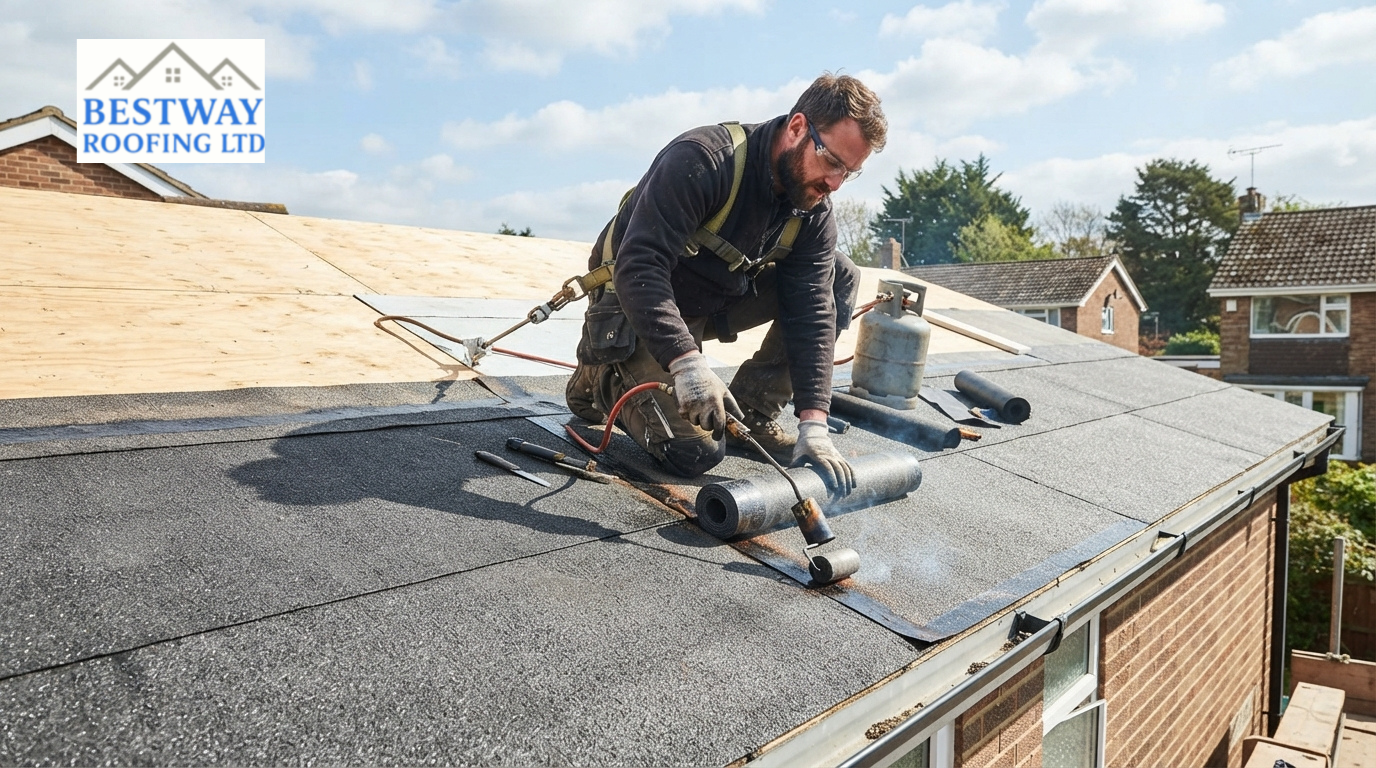
Felt roofing is one of the oldest and most widely used flat roofing materials in the UK. It’s typically installed in multiple layers and bonded with heat or adhesive to create a waterproof barrier.
Pros:
- Low upfront cost compared to other flat roofing systems
- Widely available, with most roofers experienced in fitting it
- Straightforward repairs for minor issues
Cons:
- Shorter lifespan than newer alternatives
- Prone to cracking, blistering, and splitting, especially in extreme temperatures
- Requires more frequent maintenance and resealing
2. GRP Fibreglass Roofing
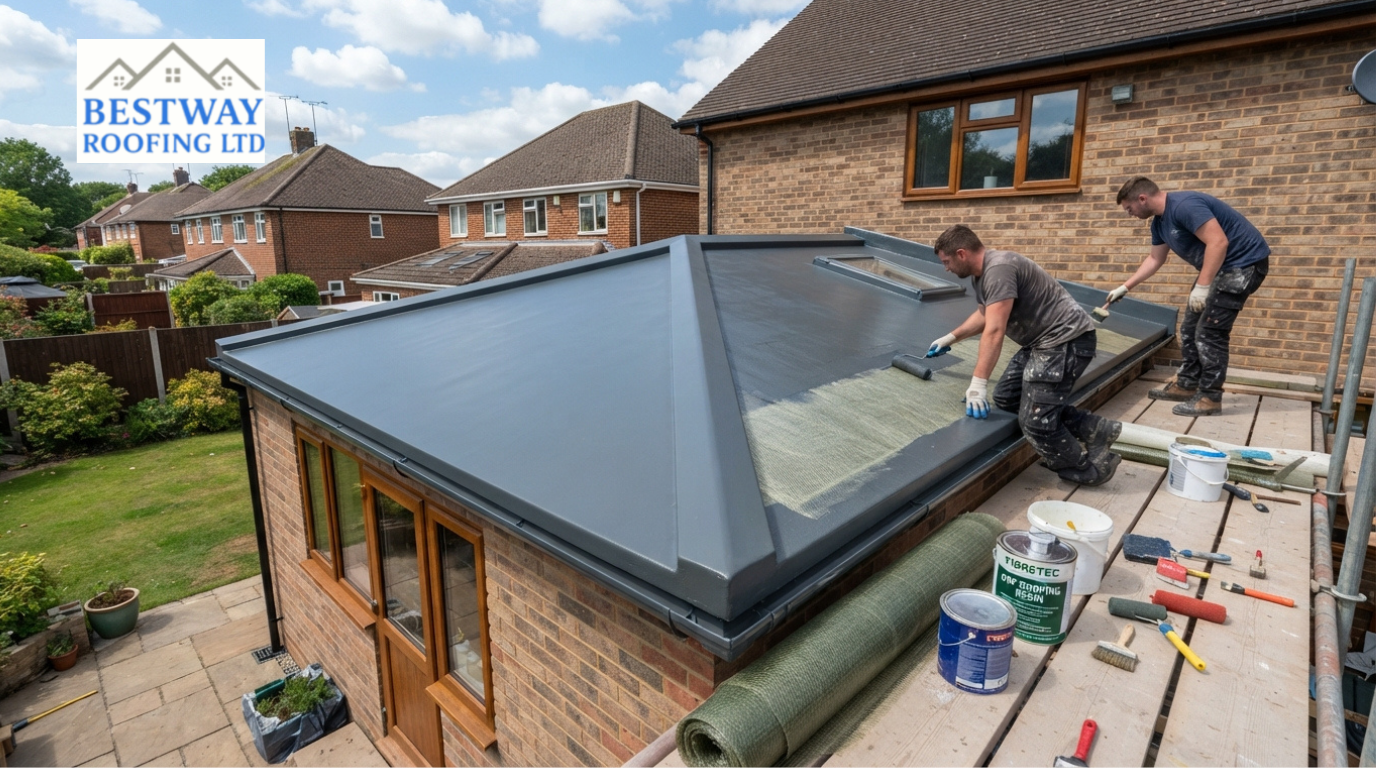
GRP fibreglass roofing has become one of the most popular flat roofing options in the UK over the past decade. It’s applied as a liquid resin over a fibreglass matting layer, which then cures into a single, seamless waterproof surface.
Pros:
- Completely seamless, so there are no joints for water to penetrate
- Highly durable and resistant to UV damage, weathering, and foot traffic
- Low maintenance once installed
- Can be walked on, useful for roof terraces or balconies
Cons:
- Higher upfront installation cost than felt
- Requires a skilled, experienced installer for a proper finish
- Can be tricky to repair invisibly if damaged, as colour matching isn’t always perfect
3. EPDM Rubber Roofing
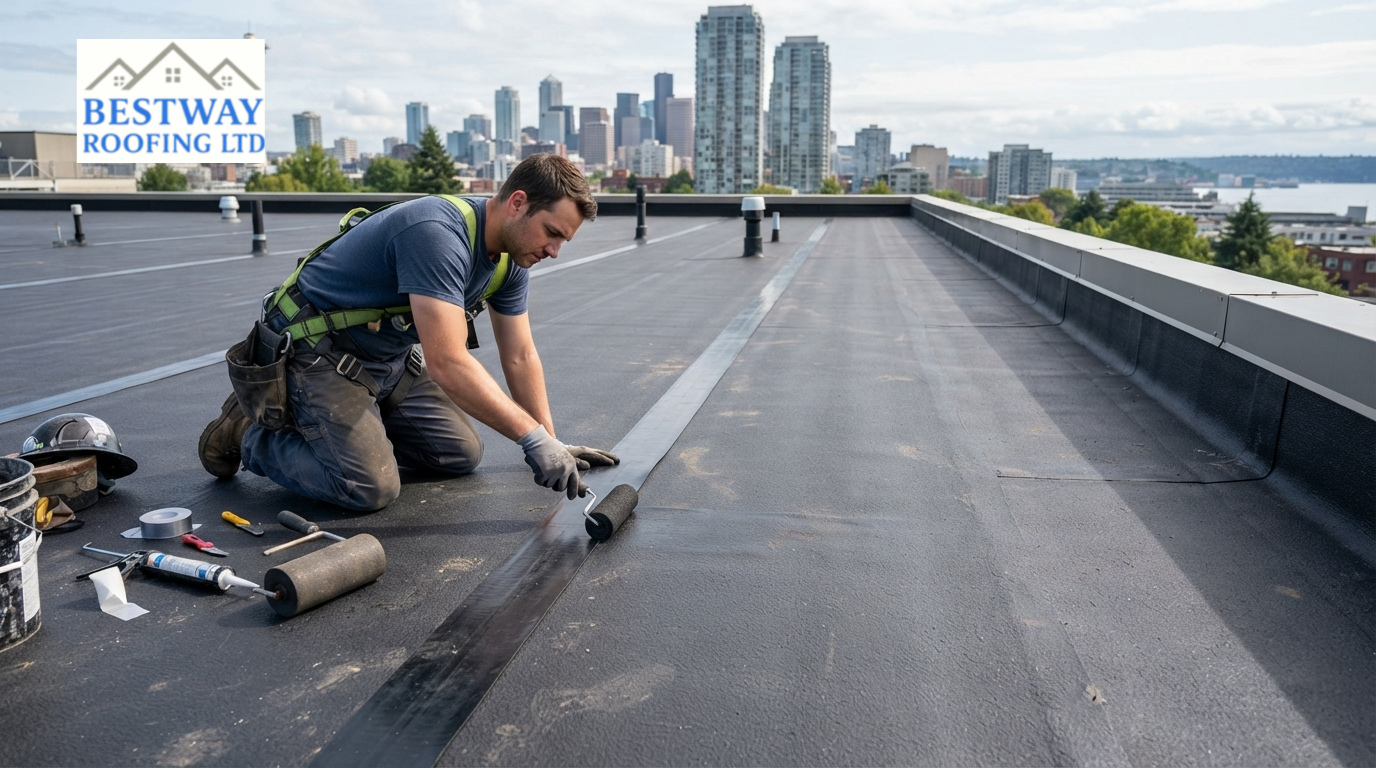
EPDM (Ethylene Propylene Diene Monomer) is a synthetic rubber membrane that’s installed in large sheets, minimising the number of joints on the roof. It’s known for being one of the most flexible and durable flat roofing materials available.
Pros:
- Excellent flexibility, so it copes well with temperature changes and building movement
- Long lifespan with minimal maintenance
- Resistant to UV rays, ozone, and extreme weather
- Fewer seams reduce the risk of leaks
Cons:
- Mid-to-high installation cost
- Can be punctured by sharp objects or heavy impact
- Repairs, while possible, need to be done correctly to maintain the membrane’s integrity
4. Torch-On Felt (Modified Bitumen)
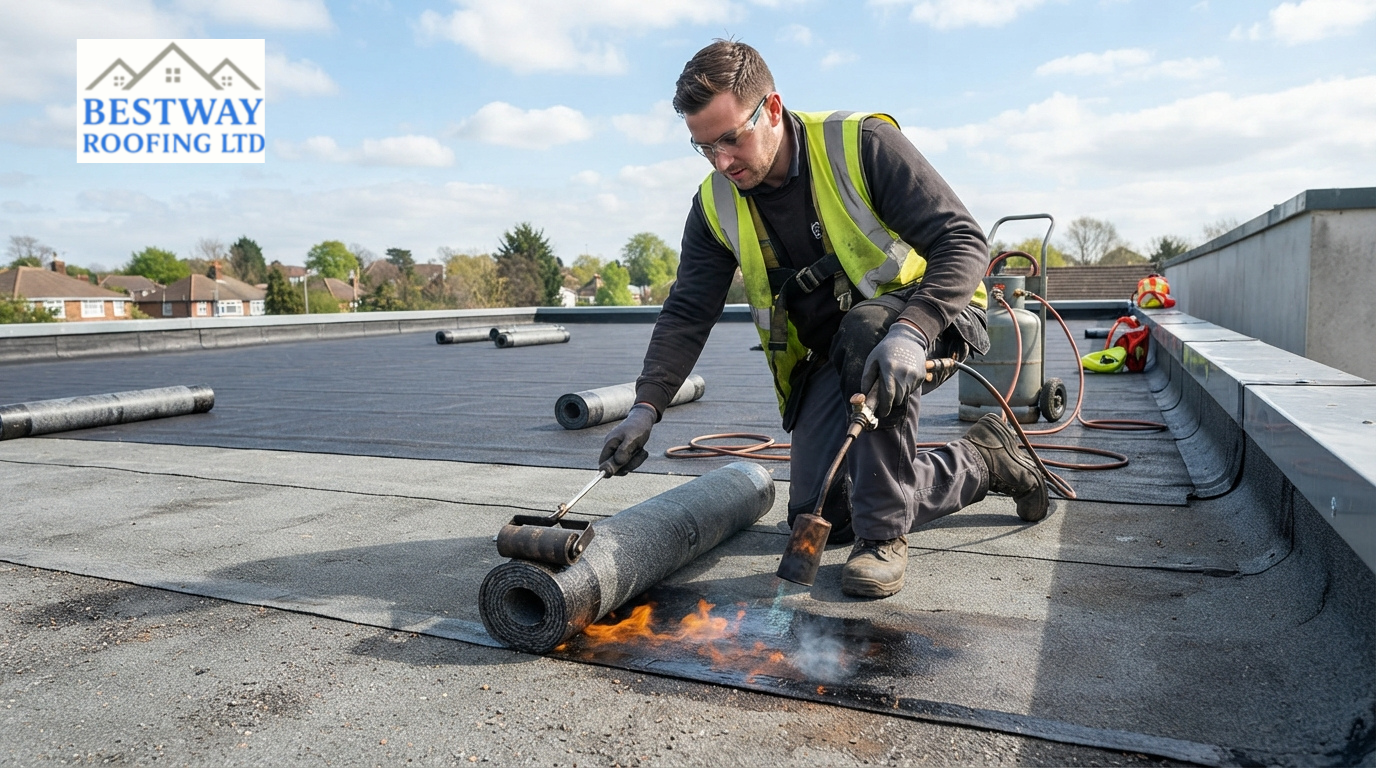
Torch-on felt is a more advanced version of traditional built-up felt. It uses modified bitumen sheets that are heated with a blowtorch during installation, creating a stronger bond and a more durable waterproof layer.
Pros:
- More durable and longer-lasting than standard felt
- Good resistance to weathering and UV exposure
- Relatively cost-effective compared to GRP or EPDM
Cons:
- Installation involves an open flame, which requires strict safety precautions
- Still less durable overall than GRP or EPDM
- Seams between sheets can be a weak point if not properly sealed
5. Single Ply Membrane Roofing (PVC/TPO)
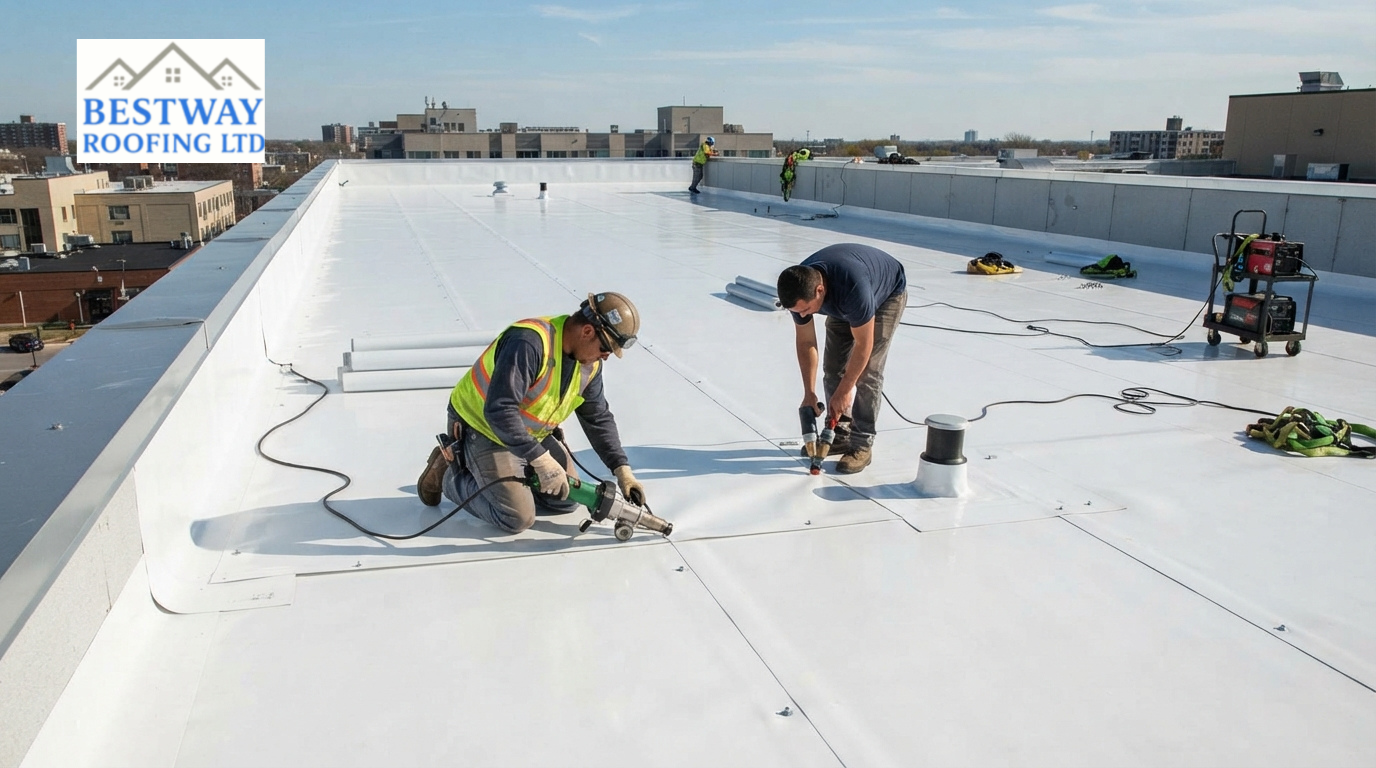
Single ply membrane systems use large, factory-manufactured sheets of PVC or TPO (Thermoplastic Polyolefin) that are rolled out and mechanically fixed or adhered to the roof deck, then heat-welded at the seams.
Pros:
- Lightweight and quick to install
- Highly resistant to UV rays, chemicals, and punctures
- Reflective options available, which can improve energy efficiency
- Long-lasting with proper installation
Cons:
- Higher material and labor cost
- Requires specialist installation for correctly welded seams
- Less commonly offered by smaller, local roofing firms
Quick Comparison of Flat Roof Types
| Roof Type | Average Lifespan | Relative Cost | Best Suited For |
|---|---|---|---|
| Felt Roofing | 10–15 years | Low | Budget projects, sheds, garages |
| GRP Fibreglass | 25–30 years | Mid-to-high | Extensions, balconies, roof terraces |
| EPDM Rubber | 30–50 years | Mid-to-high | Long-term, low-maintenance properties |
| Torch-On Felt | 15–20 years | Mid | Extensions and outbuildings on a budget |
| Single Ply Membrane | 20–30 years | High | Larger commercial or high-spec residential roofs |
How to Choose the Right Flat Roof Type
With several options available, the right choice usually comes down to a few key factors:
- Budget: Felt and torch-on felt are more affordable upfront, while EPDM and single-ply membranes cost more but last significantly longer.
- Lifespan expectations: If you want a roof that lasts decades with minimal attention, EPDM or GRP fibreglass are worth the extra investment.
- Roof usage: If the roof will be walked on regularly, such as a terrace or balcony, GRP fibreglass is often the better-suited option.
- Property type: Larger commercial roofs may benefit from single-ply membrane systems, while smaller residential extensions often do well with GRP or EPDM.
- Installer experience: Some materials, like GRP and single-ply membrane, require skilled, experienced installers to achieve a proper, long-lasting finish. Check a roofer’s experience with the specific material before committing.
Choosing the right type for your property depends on your budget, how you’ll use the roof, and how long you want it to last before needing replacement. An inspection from an experienced roofing contractor can help you weigh these factors against your property and get a recommendation built to last.
If you’re planning a flat roof installation or replacement, get in touch with our team for a free inspection. We’ll help you choose the right material for your property and provide professional flat roof services you can rely on for years to come.
Conclusion
Flat roofs come in a range of materials, each with its own balance of cost, durability, and lifespan. Felt roofing remains the most budget-friendly option, while GRP fibreglass and EPDM rubber offer significantly longer lifespans and lower long-term maintenance. Torch-on felt sits somewhere in between, and single-ply membranes are typically reserved for larger or higher-spec projects.
FAQs
How long does a flat roof last?
It depends on the material. Felt roofing typically lasts 10–15 years; torch-on felt, around 15–20 years; GRP fibreglass and single-ply membrane roofs, 20–30 years; and EPDM rubber can last 30–50 years with proper installation and maintenance.
Which type of flat roof is the cheapest?
Felt roofing has the lowest upfront cost of all the options, making it a popular choice for garages, sheds, and other budget projects. However, it typically needs more frequent maintenance and has a shorter lifespan than other materials.
Can I walk on a flat roof?
It depends on the material and how the roof was constructed. GRP fibreglass is one of the most walkable options, making it suitable for terraces and balconies. Other materials may not be designed for regular foot traffic, so check with your roofer before using the space this way.
Do flat roofs need more maintenance than pitched roofs?
Generally, yes. Because flat roofs have a much lower pitch, water drains more slowly, making them more prone to pooling, debris buildup, and wear over time. Regular inspections and upkeep help extend their lifespan and catch issues early.
