
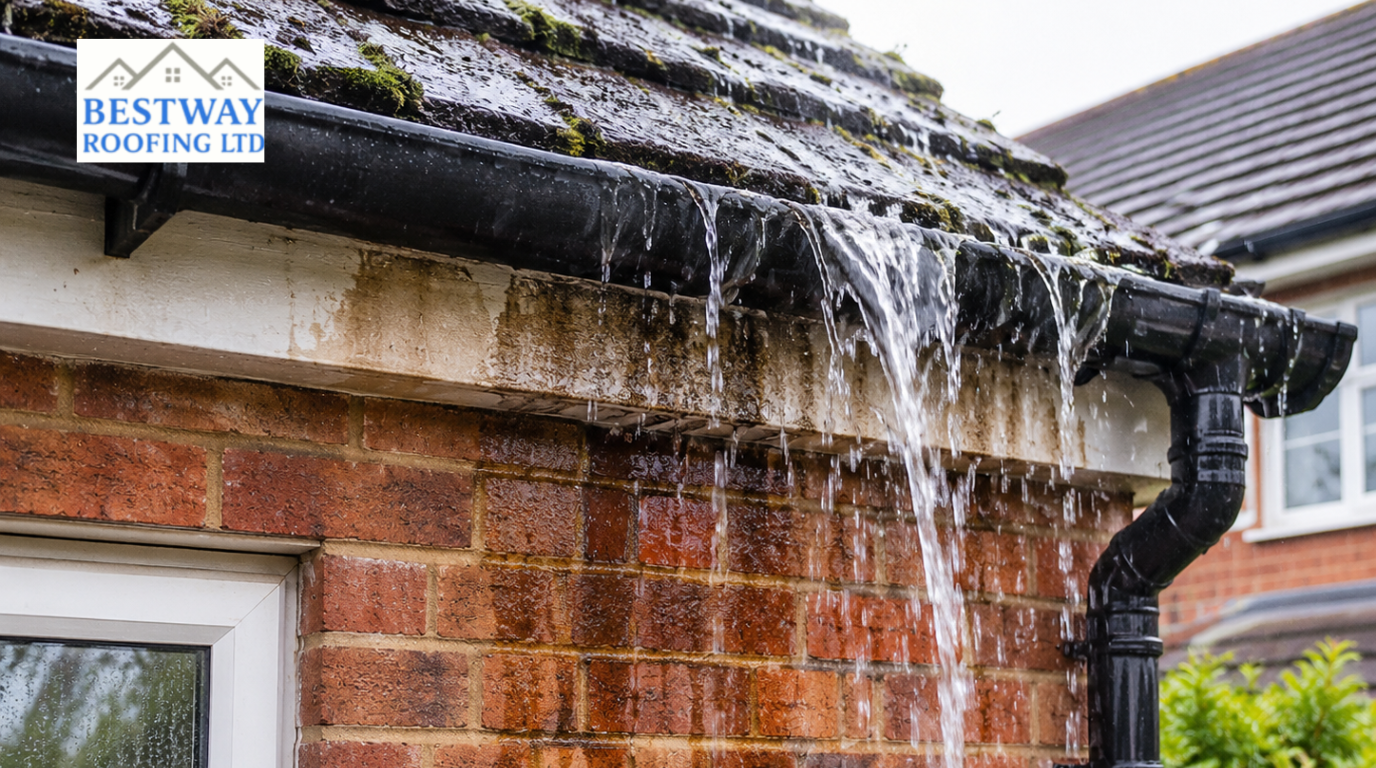
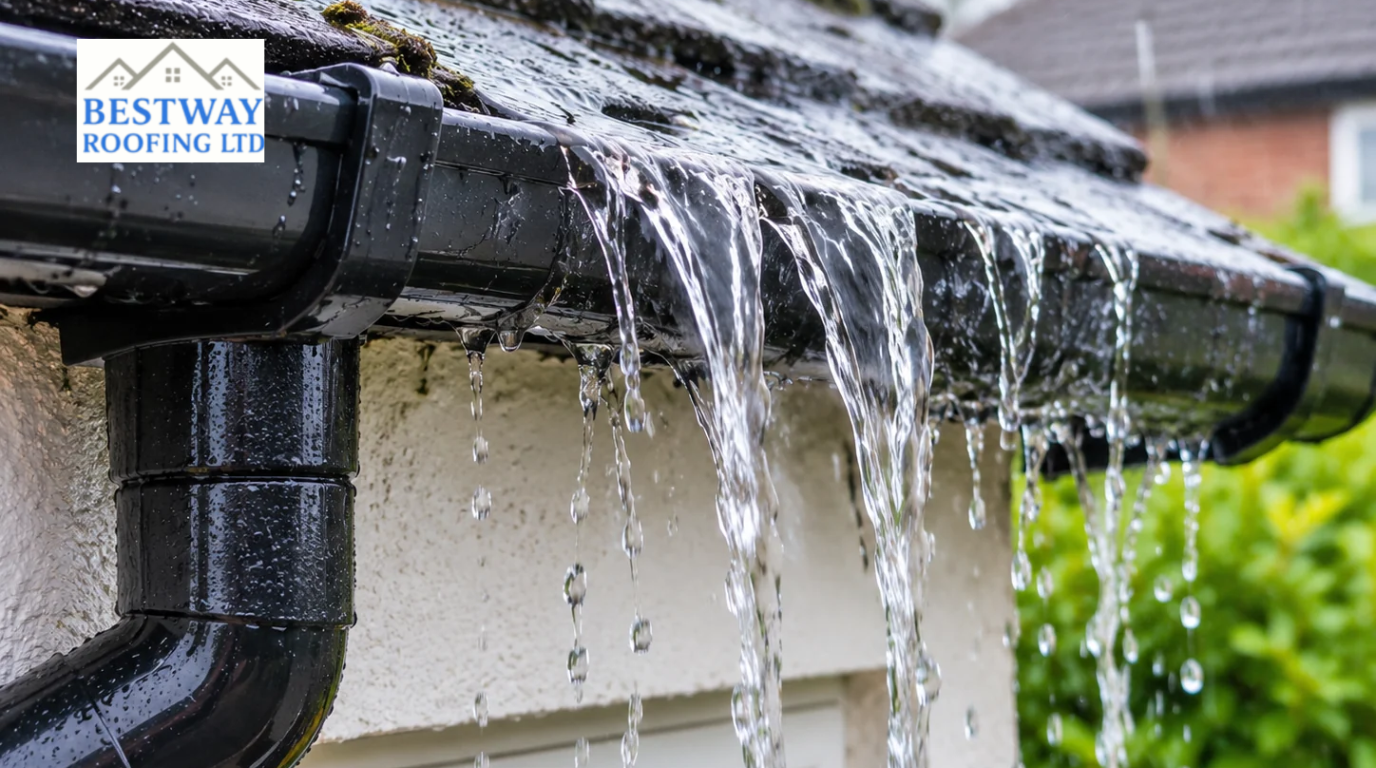
Gutters still overflow after cleaning when debris is not the real problem. Common causes include a blocked downpipe or drain, gutters that sag or slope the wrong way, leaking joints, gutters that are too small for the roof, and heavy rain. Run water through the downpipe first. If it backs up, clear the downpipe and drain. If water pools or leaks at joints, the gutter needs realigning or repairing, not more cleaning.
You have cleared out the leaves and moss, yet the next heavy shower still sends water pouring over the front of the gutter. This is frustrating, and it usually means the real cause wasn’t the debris. In this guide, we explain why gutters overflow even after cleaning, how to track down the cause, and what it takes to fix it properly.
Why do Gutters Overflow After Cleaning
A clean gutter can only carry water away if it slopes correctly, joins up properly, and drains into a clear downpipe. These are the most common reasons it does not:
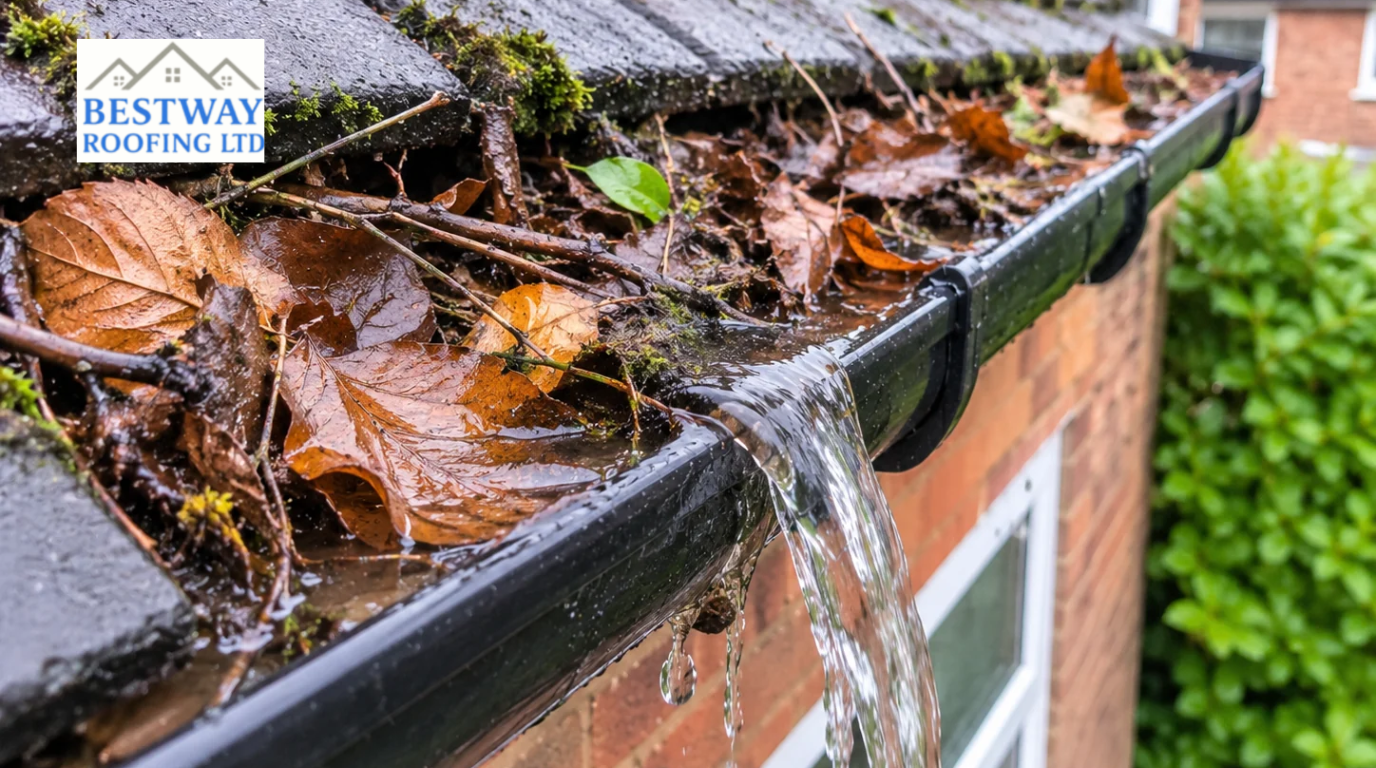
- Blocked downpipe: Leaves and moss can pack into the downpipe, a bend, or the shoe even when the gutter run looks clear.
- Blocked drain or gully: Water leaves the downpipe but cannot drain away, so it backs up.
- Wrong slope: Gutters need a slight fall towards the outlet, often around 1 in 600. Without it, water pools and spills over the front.
- Sagging or misaligned gutter: Loose brackets or a rotten fascia let the run drop, leaving low spots that fill and overflow.
- Leaking joints and corners: Failed seals drip water down the wall, which can look like overflow.
- Gutter too small for the roof: A large or steep roof can shed more water than a small gutter can carry in heavy rain.
- Roof edge problems: Tiles that stop short of the gutter, or a missing eaves tray, let water run behind the gutter or overshoot it.
- Debris from the roof: Moss and grit washed off the tiles can refill a clean gutter within weeks.
How to Find the Cause of Overflowing Gutters
The simplest test is to watch the gutter in heavy rain, or to run water along it with a hose. Then work through these checks.
Step 1: Check the downpipe
Pour a bucket of water into the gutter above the downpipe. If it drains slowly or backs up, the downpipe or the drain below is blocked.
Step 2: Check the slope
Run water in at the far end and watch how it moves. Standing water along the run means the gutter isn’t sloping toward the outlet.
Step 3: Check joints, brackets and corners
Look for drips, stains, and gaps at joints and corners, and for brackets that have pulled away from the fascia. Use binoculars from the ground rather than a ladder if you can.
Step 4: Check the roof edge
Make sure roof water lands inside the gutter and doesn’t run behind it or shoot past it in heavy rain.
How to Fix Overflowing Gutters
1. Clear Blockages and Debris
Leaves, moss, and dirt most commonly cause overflow. Remove them by hand or with a gutter scoop, then flush the gutter with a hose to check that water flows freely towards the downpipe.
2. Unblock the Downpipe
If the gutter is clear but still overflows, the downpipe may be blocked. Clear it with a plumber’s rod or flush it with water from the top. A blocked downpipe makes water back up and spill over the edge.
3. Re-align Sagging Gutters
Gutters need a slight fall towards the outlet. If sections have sagged, water pools and spills over. Adjust the brackets or add extra supports so the gutter sits at the correct angle.
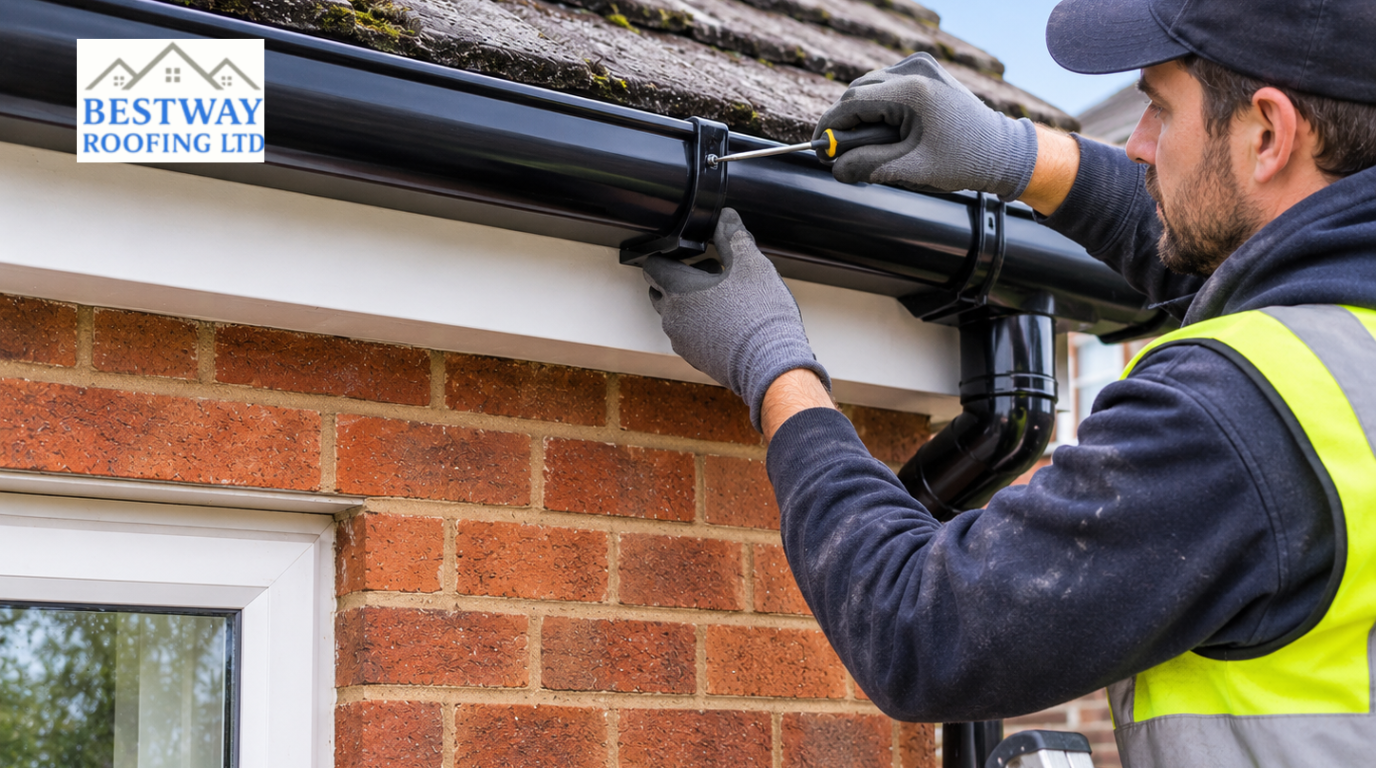
4. Replace Damaged Brackets and Clips
Loose, rusted, or broken brackets let the gutter drop out of position. Replacing them restores the right slope and stops water escaping.
5. Seal Leaking Joints
Worn seals at joints and corners cause drips and overflow. Clean the area and reseal with a gutter sealant, or replace the joint if it is badly worn.
6. Repair or Replace Cracked Sections
Cracks, splits, and holes are not worth patching repeatedly. If a section is badly damaged, replacing it is the longer-lasting fix.
7. Upgrade to Wider Gutters or Add Another Downpipe
If heavy rain regularly overwhelms the system, the gutters may be too small for the roof. Larger gutters or an extra downpipe helps water drain faster.
8. Fit Gutter Guards
Gutter guards reduce debris, so blockages happen less often. They still need an occasional check, but they cut down on regular cleaning.
9. Trim Overhanging Branches
Trees near the roof drop leaves and twigs into the gutters. Trimming branches back reduces buildup, especially in autumn.
10. Book Regular Maintenance
Clean gutters at least twice a year, ideally in late autumn and spring. If you cannot reach them safely, a professional roofer can do it and spot small faults before they become costly.
The Hidden Damage Behind Overflowing Gutters
Overflowing water soaks the wall below, stains the brickwork and can lead to damp inside the house. Over time, it rots fascias and soffits, and in winter it can freeze and crack the gutter. Damp from a gutter fault is easy to mistake for rising damp, so it is worth fixing early. Our guide explains what a DPC is and how rising damp differs from water running down the wall. For general background on how guttering works, see this overview of rain gutters.
DIY Gutter Repair or Call a Professional Roofer?
Many homeowners can clear a low, easy-to-reach gutter themselves. If your gutters are at ground-floor height and you can work from a stable step ladder, scooping out leaves and flushing the gutter with a hose is a reasonable DIY job. Wear gloves, keep both feet on the ladder, and never lean out to reach further along.
It is better to call a roofer if:
- The gutters are on a two-storey house or above a conservatory or extension roof
- You need to use a long ladder or work from a roof
- The gutter is sagging, cracked, or pulling away from the wall
- Water still overflows after you have cleared the gutter and downpipe
- You can see damp patches, stained brickwork, or rotting fascias
An experienced roofer can clear the gutters safely, check the fall and brackets, and spot small faults before they turn into costly repairs. At Bestway Roofing – Chelmsford Roofing, we provide professional fascia and guttering services for homes across Chelmsford, Braintree, Long Melford and the surrounding areas. Our certified and fully insured team has more than 30 years of experience, and we will find out why your gutters overflow and fix the cause, not just the symptom.
Not sure what is wrong with your gutters? Contact us today for a free, no-obligation quote.
FAQs
Can overflowing gutters cause damp?
Yes. When a gutter overflows, water runs down the wall instead of draining away. Over time, this can soak the brickwork and lead to damp patches inside the house.
How much does it cost to repair overflowing gutters in the UK?
Most gutter repairs cost between £80 and £400, with small fixes like a leaking joint or a new bracket costing less. Full replacement averages around £1,000 to £1,600, so get a written quote first.
How often should gutters be cleaned?
Clean gutters at least twice a year, in late autumn and spring. If you have trees nearby, clean them more often and check them after heavy storms.
How do I know if my gutter slope is wrong?
Pour water in at the far end. If it pools instead of flowing toward the downpipe, or you can see the gutter dipping between brackets, you need to reset the fall.
