
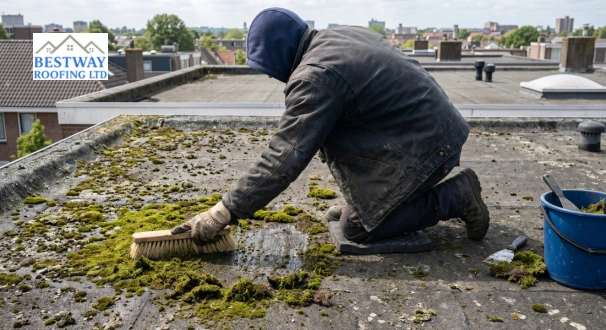
Moss is one of the most common problems flat roof owners face, yet it’s also one of the most misunderstood. Many people assume it’s purely cosmetic, something that looks unpleasant but doesn’t cause real harm. In reality, moss that’s left to grow unchecked can quietly damage a flat roof over months and years, leading to leaks, structural deterioration, and repair costs that could easily have been avoided.
This guide explains why moss grows on flat roofs, what it actually does to the surface beneath it, how to remove it safely, and how to stop it from coming back.
Why Moss Grows on Flat Roofs
Moss is a simple plant that needs very little to survive: moisture, shade, and something to grip onto. Flat roofs, almost by design, provide all three.
Unlike pitched roofs, where rainwater runs off quickly, flat roofs drain more slowly. Water sits on the surface longer, keeping it damp for extended periods. Add in shade from nearby trees or adjacent buildings, and the roof dries out even more slowly. Over time, airborne moss spores, which are present virtually everywhere outdoors, land on the surface, find those damp conditions, and begin to grow.
Organic debris makes things worse. Leaves, dirt, and small twigs accumulate on flat roofs and hold moisture against the surface like a damp blanket. Roofs that aren’t cleaned regularly develop a thin layer of organic material that acts as a perfect growing medium for moss.
In a climate like Chelmsford’s, where rainfall is spread consistently across the year, these conditions come together frequently. Flat roofs on homes, extensions, garages, and outbuildings are all susceptible, particularly if they haven’t had any attention in a year or more.
What Moss Actually Does to a Flat Roof
Understanding why moss is a problem, not just an eyesore, helps explain why it’s worth dealing with promptly.
Moisture Gets Trapped
The biggest issue with moss is that it retains water. A patch of moss on a flat roof acts like a sponge, keeping the surface beneath it constantly wet even after the rest of the roof has dried out. Roofing membranes, whether felt, EPDM rubber, or fibreglass, are designed to shed water, not sit under it indefinitely. Prolonged moisture exposure gradually softens and weakens the material, making it more prone to cracking, blistering, and eventually leaking.
Damages the Roof Surface
Moss isn’t just sitting passively on top of the roof. It produces tiny root-like structures called rhizoids that anchor it to the surface and, over time, work their way into small gaps and imperfections in roofing materials. As these structures grow, they gradually widen those gaps, lifting edges and creating openings that allow water to get underneath the membrane. What starts as minor surface growth can eventually compromise the waterproof layer entirely.
Drainage Gets Blocked
As moss spreads across a flat roof, pieces break away and wash toward drainage outlets, gutters, and downpipes. These fragments build up over time and cause blockages. When drainage is blocked, water pools on the roof rather than running off, adding weight to the structure and significantly increasing the risk of leaks. Blocked gutters can also cause water to overflow and run down external walls, potentially causing damp issues inside the property.
Internal Water Damage
Once water finds a way through a compromised roof membrane, it doesn’t stay in the roof; it travels into the building. The first signs are often damp patches on ceilings or walls, or a musty smell in rooms directly below the affected area. Left unaddressed, persistent water ingress causes mould growth, damaged insulation, and deterioration of the building structure itself. By the time internal symptoms appear, the damage to the roof is usually already significant.
Warning Signs Your Flat Roof Has a Moss Problem
- Visible green or black patches on the roof surface
- Water still sitting on the roof 24–48 hours after rainfall
- Overflowing gutters or slow-draining outlets
- Damp patches on ceilings or walls directly below the roof
- A roof that hasn’t been inspected in over two years
How to Remove Moss from a Flat Roof
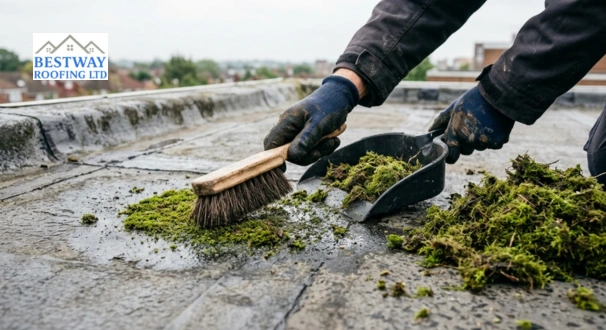
Knowing how to remove moss from a flat roof safely is just as important as knowing why it needs to go. The wrong method can damage the very surface you’re trying to protect.
Start with an Inspection
Before doing anything else, take a careful look at the roof’s condition. Check for cracks, tears, loose edges, or areas where the membrane has started to lift. If the roof shows signs of existing damage, those issues need to be addressed before any cleaning begins; otherwise, the cleaning process can introduce water into areas that are already vulnerable. If you’re unsure what you’re looking at, or if the roof is difficult to access safely, it’s worth getting a professional opinion at this stage.
Clear the Surface First
Remove any loose debris, leaves, twigs, and dirt before tackling the moss itself. This makes it easier to see the full extent of the growth and prevents material from washing into drainage outlets during cleaning.
Remove Moss Gently
The right tool for removing moss from a flat roof is a soft-bristled brush. Work methodically across the affected area, loosening and gathering the moss without pressing too hard into the surface. The goal is to detach the growth without abrading or scratching the membrane beneath. This takes a little patience, but it’s the approach that protects the roof rather than damaging it.
Apply a Biocide Treatment
Physical removal alone doesn’t eliminate moss; it removes the visible growth but leaves behind spores and microscopic fragments that will regrow. After brushing, apply a biocide product formulated for roofing use. These treatments kill off remaining spores and continue working for several months after application, gradually clearing any residual growth. Many professional-grade biocides provide protection for up to a year or more.
Check the Drainage
Once the roof is clean, make sure all drainage outlets, gutters, and downpipes are clear and flowing freely. This is a step that’s easy to overlook but makes a significant difference to how quickly moss returns to standing water, which is one of the main reasons it grows in the first place.
Methods You Should Never Use on a Flat Roof
- Pressure washing — the high-pressure stream damages roofing membranes and forces water beneath surface layers
- Harsh chemical strippers — products designed for paths or driveways degrade waterproof roofing materials
- Metal scrapers or wire brushes — abrasive tools scratch and puncture the membrane, creating new entry points for water
How to Stop Moss Coming Back
Removing moss is straightforward once you know how. Keeping it away requires a bit of ongoing attention, but none of it is complicated.
Reduce Shade on the Roof
The single most effective thing you can do is reduce the shade on the roof. Trimming back overhanging branches allows more sunlight and airflow to reach the surface, which means the roof dries out faster after rain and stays drier overall. Moss struggles to establish itself on a surface that isn’t persistently damp.
Keep Drainage Clear
Keeping drainage clear is equally important. Gutters and outlets should be checked and cleared at least twice a year, typically in spring and autumn, to prevent the water pooling that moss depends on. Clearing debris from the roof surface at the same time removes the organic material that provides a growing medium.
Use Zinc or Copper Strips
Some property owners go a step further by having zinc or copper strips fitted along roof edges. These metals are naturally toxic to moss; as rainwater runs over them, it picks up trace particles that spread across the roof surface and inhibit growth. It’s a passive, long-term solution that works quietly in the background between maintenance visits.
Schedule Regular Roof Inspections
Scheduling a professional inspection once or twice a year is also worthwhile, not just for moss but for the roof’s general condition. Small issues, such as a minor crack or a slightly lifted edge, are quick and inexpensive to fix when caught early. The same problems left for two or three years become significantly more costly.
Flat Roof Moss Removal: What Affects the Cost?
- Roof size — larger areas take more time and product
- Severity of moss growth — heavier infestations require more careful work
- Access — difficult or high roofs may need specialist equipment
- Roof condition — any repairs needed alongside cleaning add to the cost
- Guarantee length — longer moss-free guarantees typically cost more upfront but offer better value
Conclusion
Moss on a flat roof is a problem that only gets more expensive the longer it goes unaddressed. Moisture retention, blocked drainage, membrane deterioration, and internal damp are all avoidable with timely action and a consistent maintenance routine.
Whether you’re looking to remove moss from a flat roof yourself or want a professional flat roof specialist to handle it properly, acting early is always the right call. For anything beyond minor surface growth, the experienced roofers in Chelmsford offer the safest, most thorough, and most lasting results. Good flat roof maintenance now is always cheaper than emergency repairs later.
Frequently Asked Questions
Q. Is moss on a flat roof dangerous?
Moss itself is not immediately dangerous, but it traps moisture, blocks drainage, and gradually destroys roofing membranes. Left untreated for several years, it causes leaks and significant internal water damage.
Q. Can I remove moss from my flat roof myself?
Minor growth on an accessible, well-maintained roof can be tackled safely with a soft brush and appropriate biocide product. For significant growth, damaged membranes, or difficult access, professional flat roof specialists are a much better option.
Q. How do I stop moss from growing back after removal?
Trimming overhanging trees, maintaining clear drainage, scheduling bi-annual roof inspections, and applying a professional biocide treatment are the most effective long-term prevention measures.
Q. How often should a flat roof be inspected?
Most roofers in Chelmsford recommend at least twice a year, in the spring and autumn. Older roofs or those with previous issues benefit from more frequent checks.
